
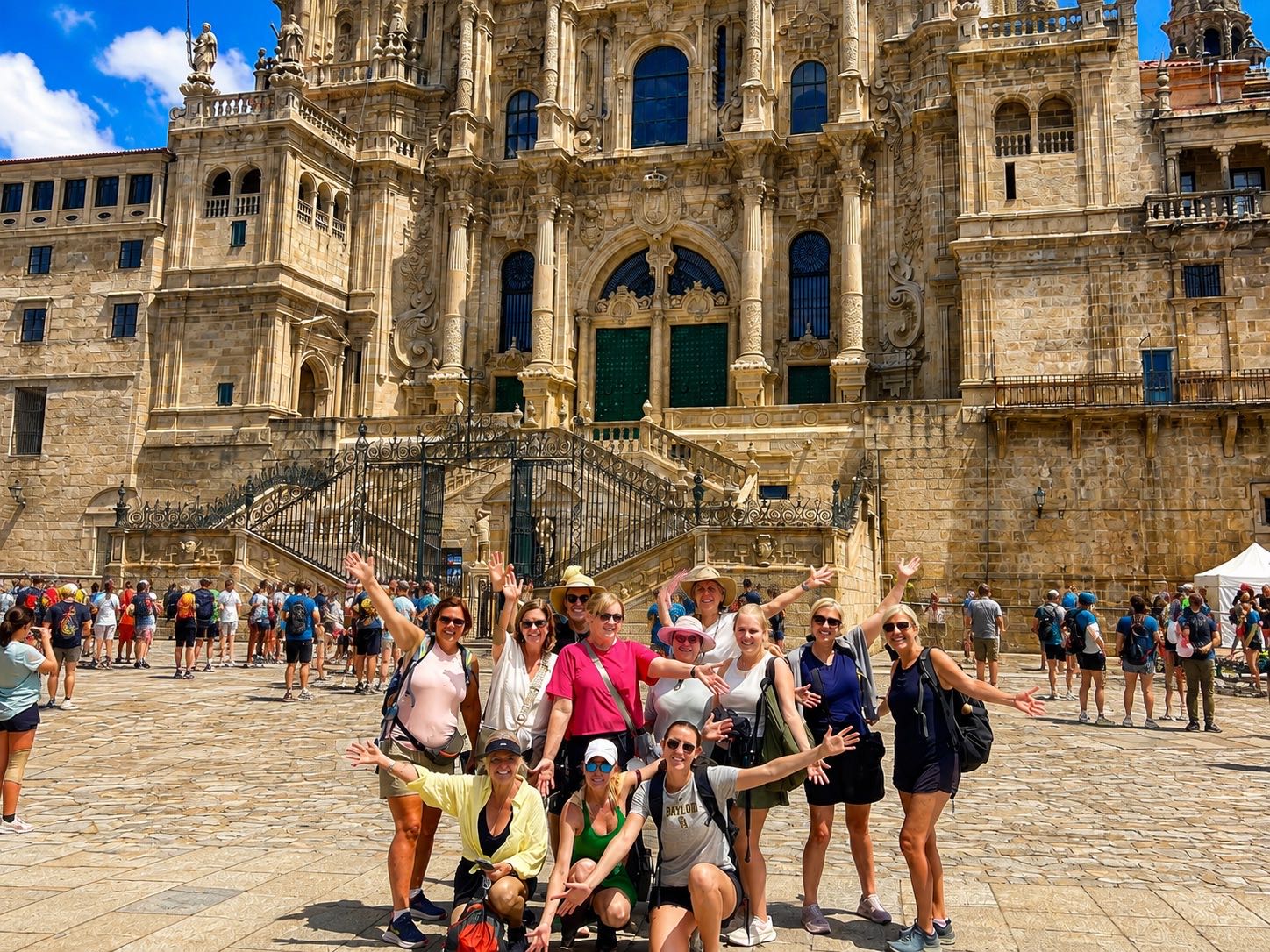
The Camino de Santiago is the pilgrim route to Santiago de Compostela, and Gunvor has led groups on both the French and Portuguese routes over 15 times. It's not just a walk. It's a journey into yourself.
My first Camino — a gift from the heart
It didn't actually start with me. My first Camino I walked for my uncle and his group of friends. We started from León, with a support bus along the way — a solution that makes the Camino accessible to those who can't walk the whole stretch on foot. I was guide, coordinator and cheerleader all at once.
I had no idea what awaited me. From the moment I first set foot on the Camino, I was perdidamente enamorada — hopelessly in love.
«From the moment I first set foot on the Camino, I knew I would come back. And back. And back again.»
From one Camino to fifteen — and counting
After the first trip, the requests started coming in. Norwegian travel agencies, Swedish operators, Australian groups — and now this summer also an American company — have all wanted Gunvor as guide and organiser on the Camino. Some want to walk fast. Some want to walk slow. Some want to walk in silence. Everyone finds what they're looking for.
The French and Portuguese routes
Camino Francés — the classic
With groups, we usually start in Sarria — the last starting point that qualifies you for the official Compostela pilgrim certificate, perfect for an intense and meaningful 5-day programme. The final 115 kilometres into Santiago are the most beautiful. The French route is the best-known and most-walked — and in my opinion, the most beautiful of all the routes.
Camino Portugués — the calm one
The Portuguese route has several variants. The classic goes inland and starts in Tui, a charming border town on the Miño river. The coastal variant — Camino Portugués da Costa — starts in A Guarda and follows the Atlantic coast before joining the main route. There's also a more spiritual variant by boat, part of the stretch from Pontevedra to Padrón, where the leg is completed on water, sailing the last bit into Padrón. This route is calmer than the French one, with fewer tourists, and has a different atmosphere — more meditative, more intimate.
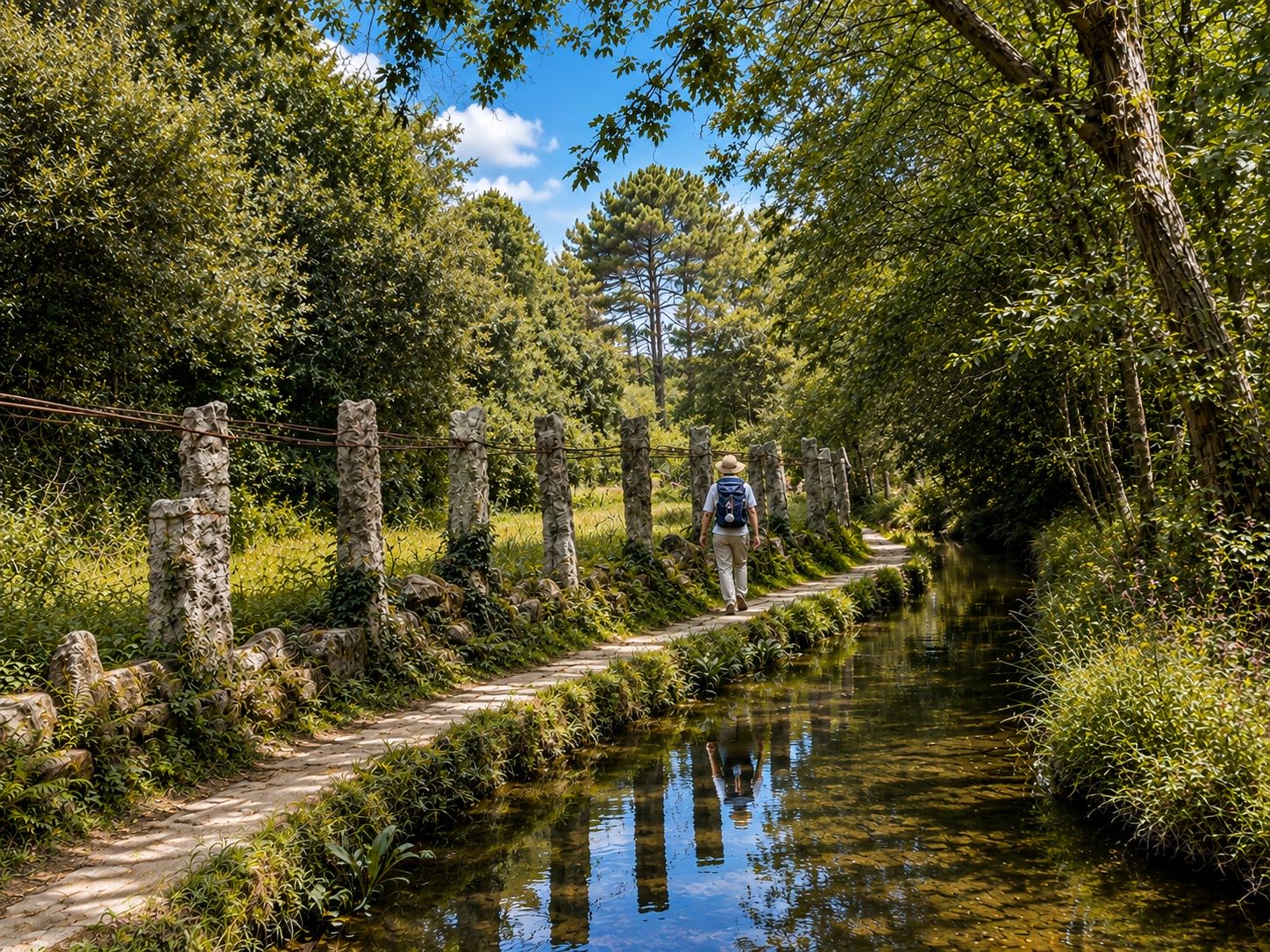
- Camino Francés — starts in Sarria, approx. 115 km to Santiago
- Camino Portugués — starts in Tui or A Guarda
- Normally a 5-day programme for groups
- Led for Norwegian, Swedish, Australian and American groups
- Over 15 complete Camino trips in total
Which route do I like best?
If you ask me honestly, it's hard to choose. I've just walked the Portuguese route again, and it was wonderful. The French route has breadth — the enormous variety in landscape, the many nationalities you meet. The Portuguese has its own calm and intimacy. Both are equally lovely in their own way. But whichever route you choose — the feeling when you arrive in Santiago is the same. Every time. Without exception.
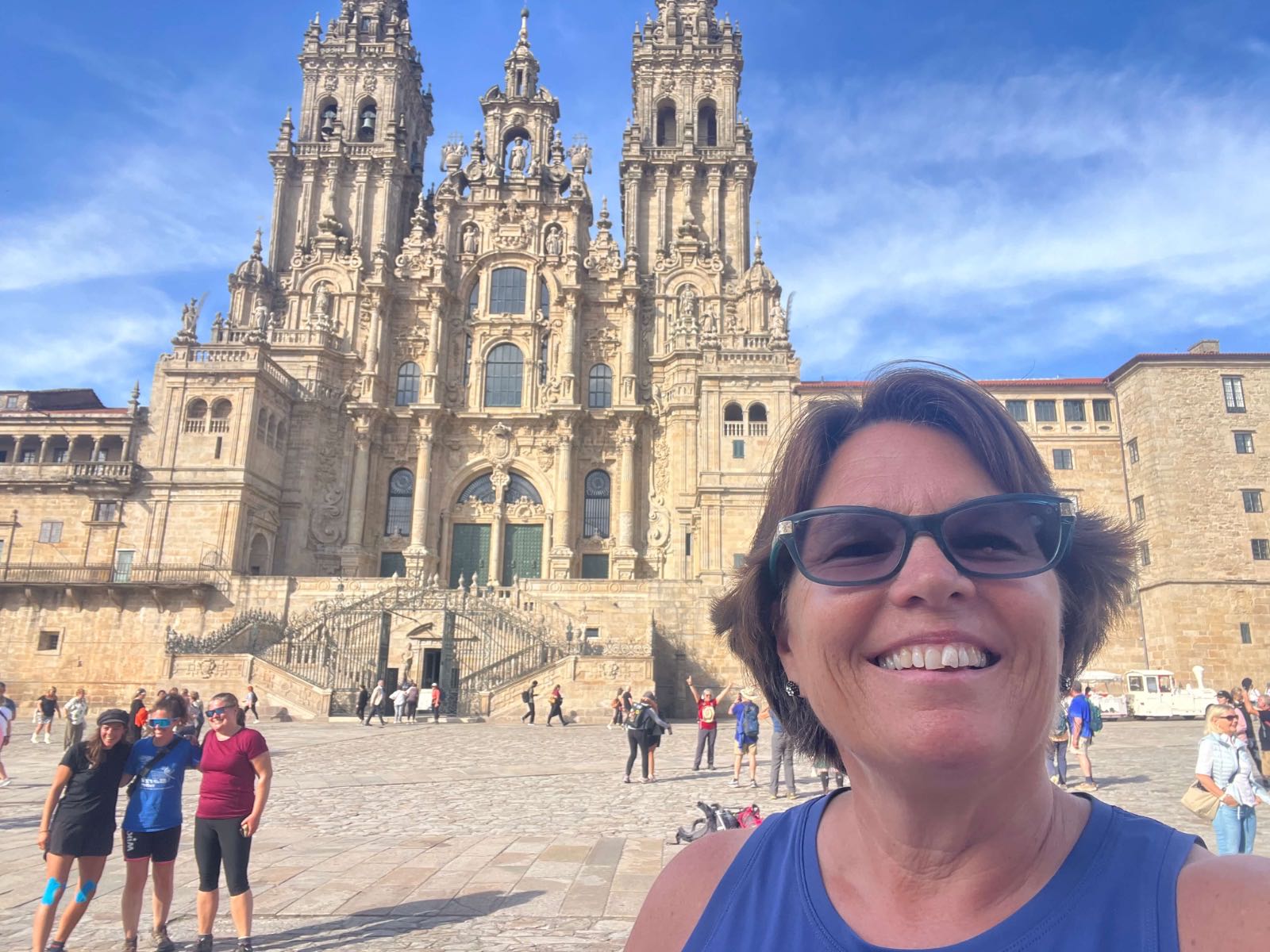
«Whichever route you choose — the feeling when you arrive at the cathedral in Santiago is the same. The tears come on their own. Every time. Without exception.»
A more spiritual Camino — the word of the day
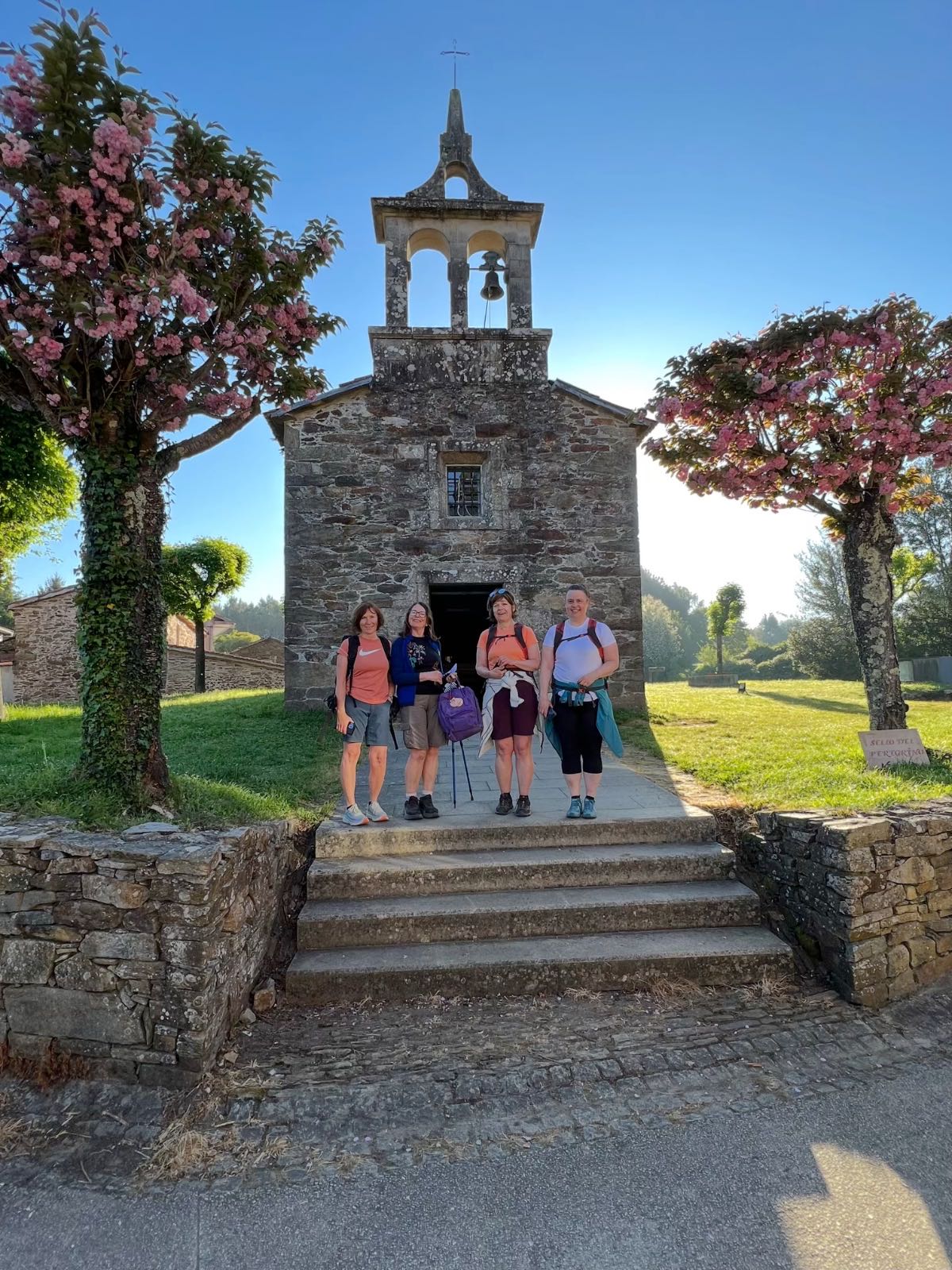
In recent years I've wanted to give the Camino a deeper dimension for my groups. I use seven words from the pilgrim route — silence, slowness, spirituality, sharing, freedom, simplicity and stillness. Each morning, before we start walking, we choose one of them — perhaps silence, perhaps sharing, perhaps slowness. We carry that word with us through the day's stage.
In the evening, over dinner, we share what the word meant to us that day. Those conversations, those stories, that openness between people who barely knew each other a few days before — that's the most beautiful thing I know.
Frequently asked questions
Camino Francés from Sarria, about 115 km to Santiago, and Camino Portugués from Tui or A Guarda — normally as a 5-day programme.
Gunvor herself prefers the French route, for the variety in landscape and the many nationalities you meet along the way — but both routes give a powerful experience on arrival in Santiago.
Over 15 complete Camino trips, for Norwegian, Swedish, Australian and American groups.