
Ronda is split in two by a gorge a hundred metres deep. The town has been there since Roman times, and the bridge that joins the two halves took forty-two years to build. Around it lie the villages that gave Andalucía the name "the white villages" — and some of them are stranger than Ronda itself.
1. The Puente Nuevo and the gorge
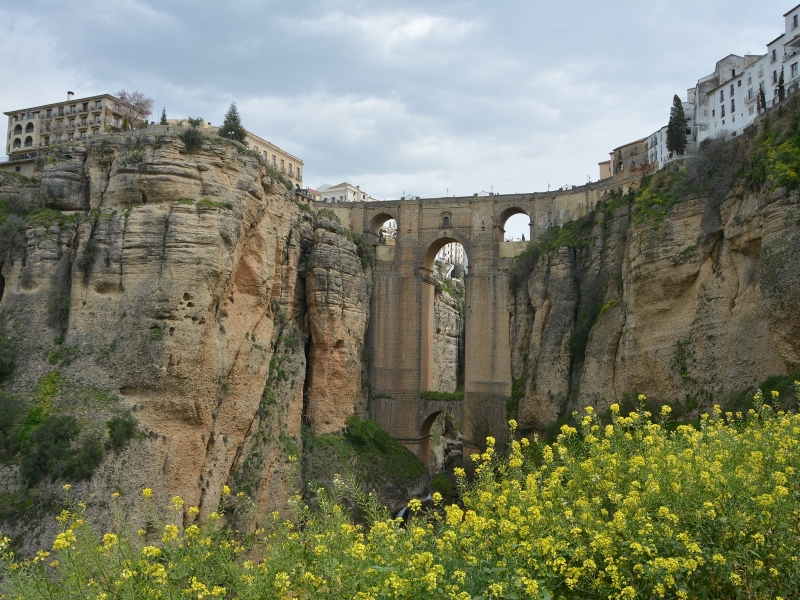
The bridge was completed in 1793 after forty-two years of work. It spans ninety metres across the El Tajo gorge, with the Guadalevín river that cut it running below.
Do not just walk across it — take the path down on the north side to see it from beneath. That is where the photograph comes from. Allow twenty minutes down and thirty back up.
During the Civil War prisoners from both sides were thrown from the bridge. Hemingway wrote about it in For Whom the Bell Tolls, drawing on real events in Ronda.
2. Plaza de Toros — the oldest bullring in Spain
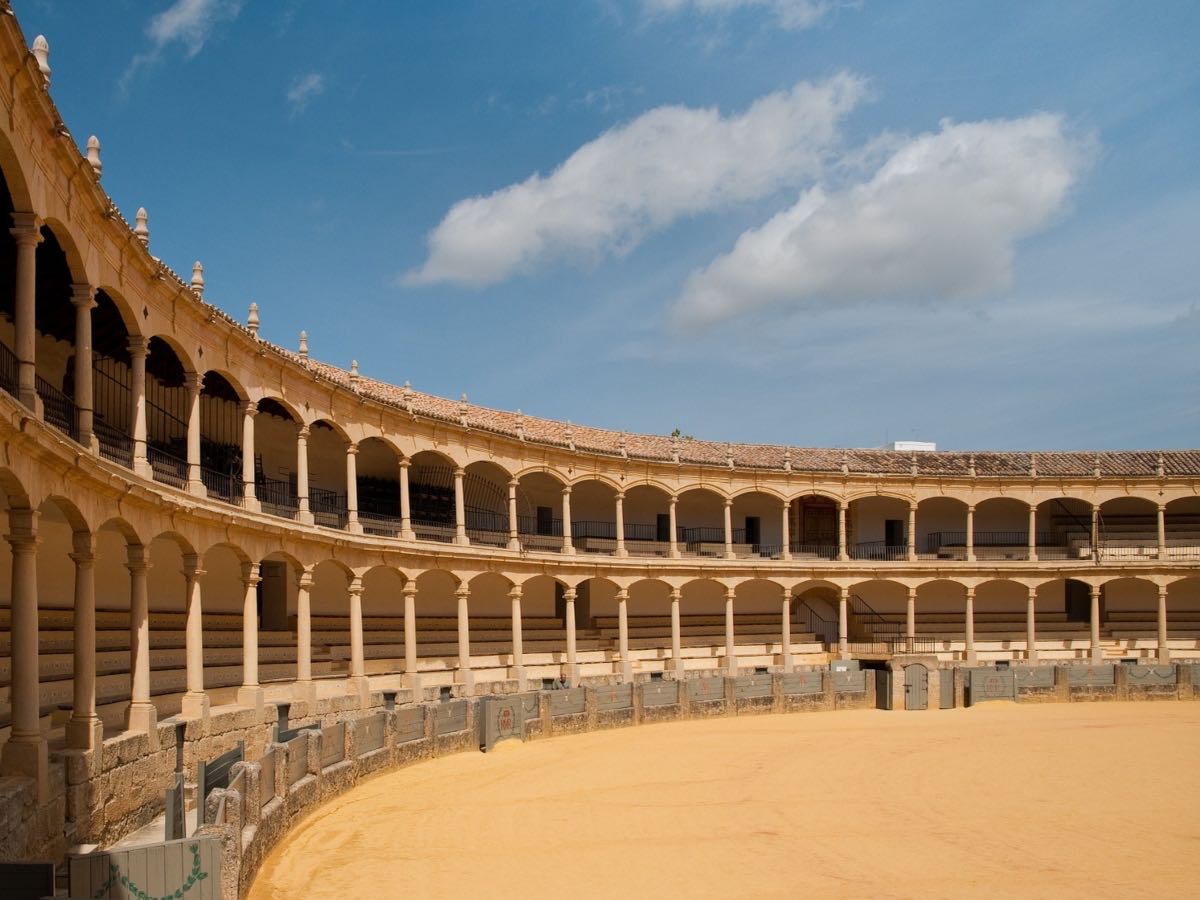
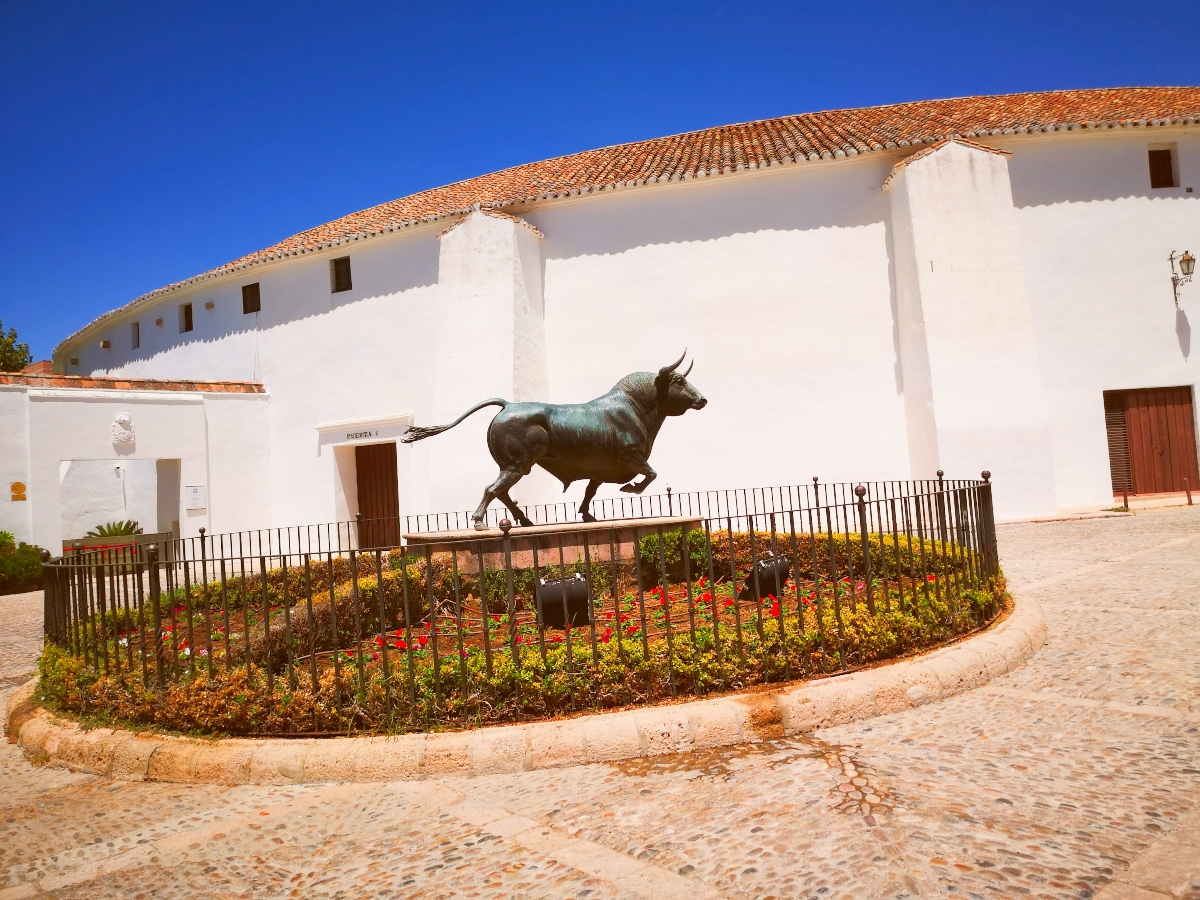
From 1785, and still used a few times a year. It was here that modern bullfighting on foot was developed, by Pedro Romero of Ronda. Before him it was done on horseback.
The ring is open as a museum and you can walk out onto the sand. Whatever you think of bullfighting, it is a space with a particular silence.
3. The old town, La Ciudad
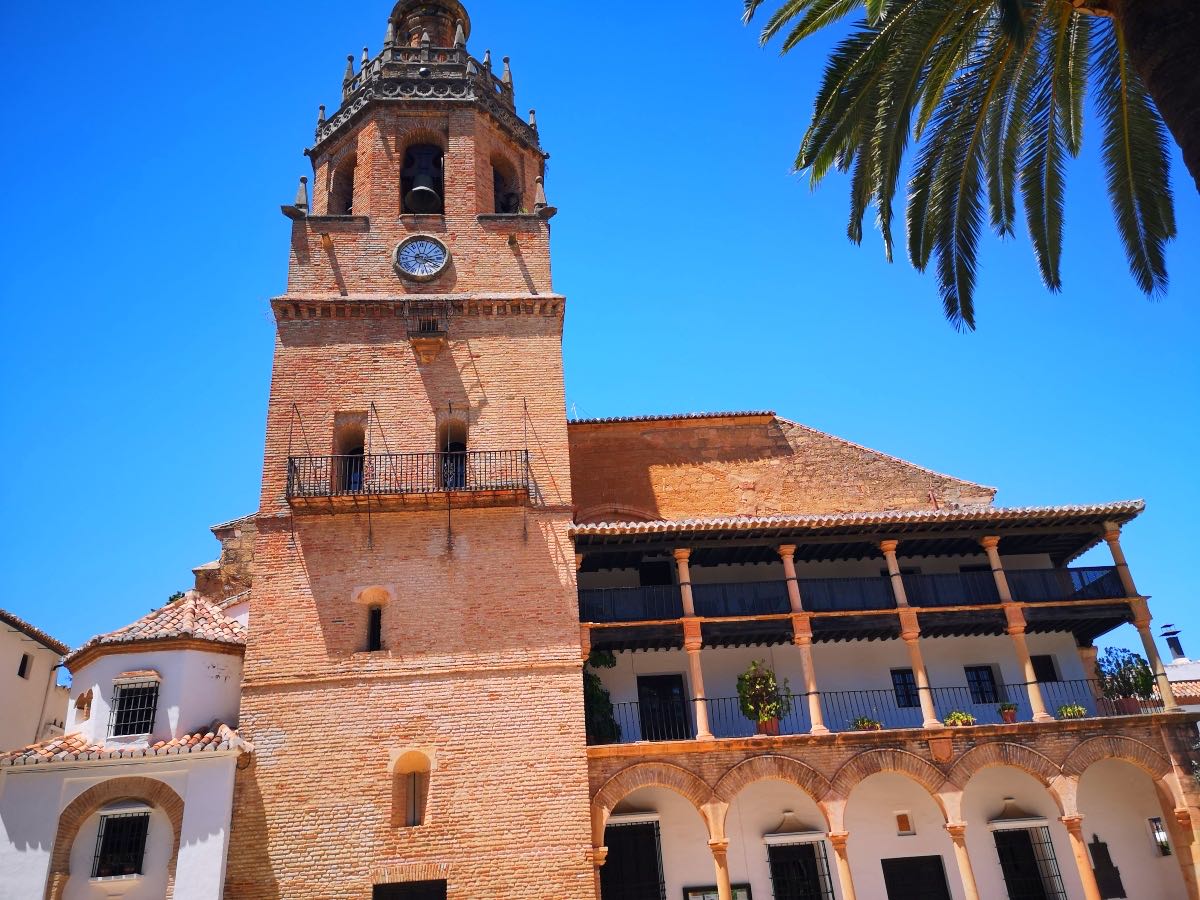
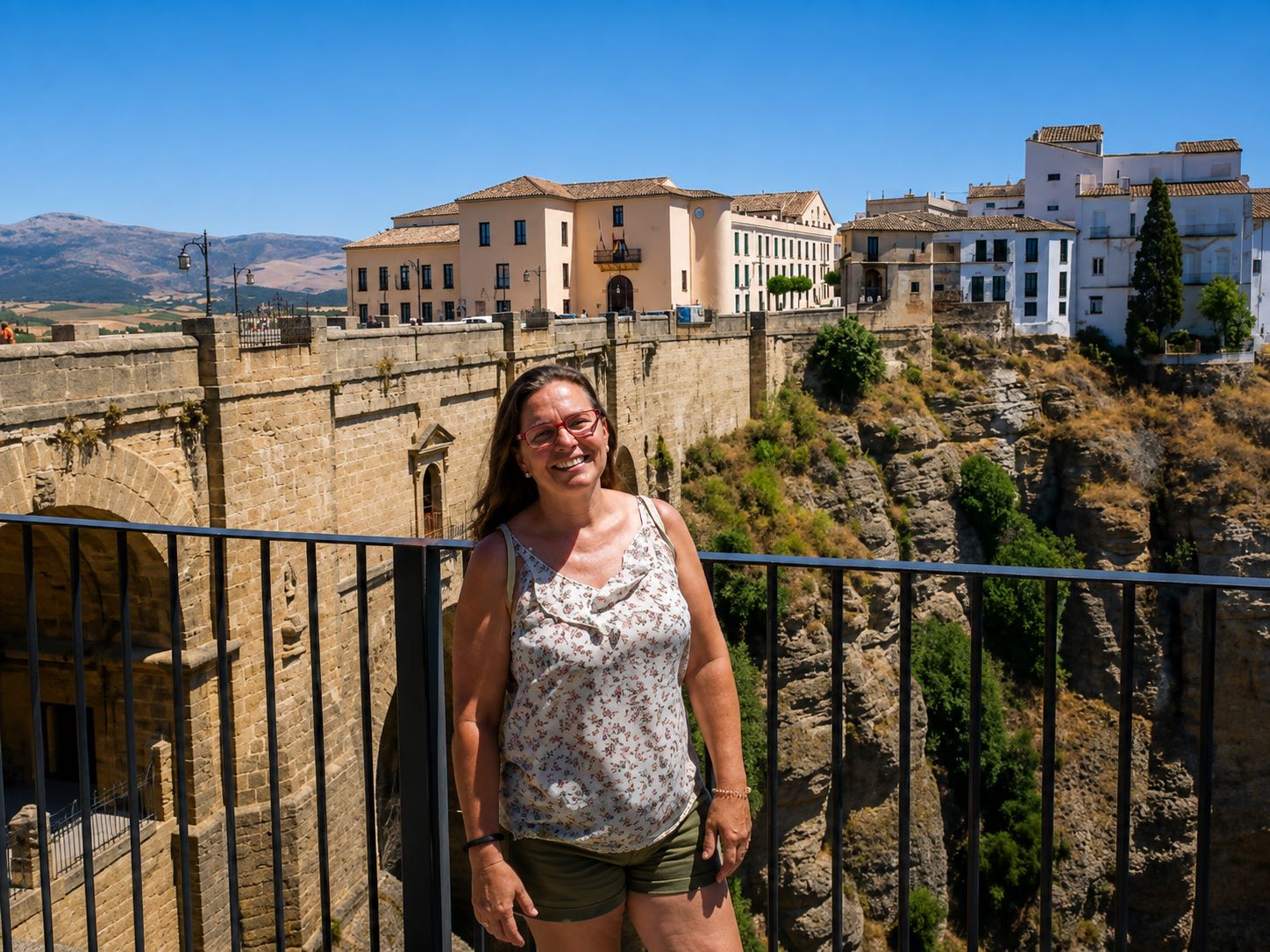
The Moorish half south of the bridge: the Palacio de Mondragón, the Arab baths from the 1200s, and the church of Santa María la Mayor, built directly over the mosque — the minaret still stands as its bell tower. Quieter than the north side, and where most visitors do not go.
4. Museo Don Bosco
An early twentieth-century villa built in modernist style with tilework and stained glass, today run by the Salesians. The house is worth a look, but it is the garden people come for.
The terraces sit right on the edge of the drop, looking out over the Serranía de Ronda and the mountains behind. It is the best view in town that you can sit down and take in slowly, without the crowds.
Entry is inexpensive and the money goes to the Salesians’ work with children. Allow twenty minutes — it is a few minutes’ walk from the bullring.
5. Setenil de las Bodegas
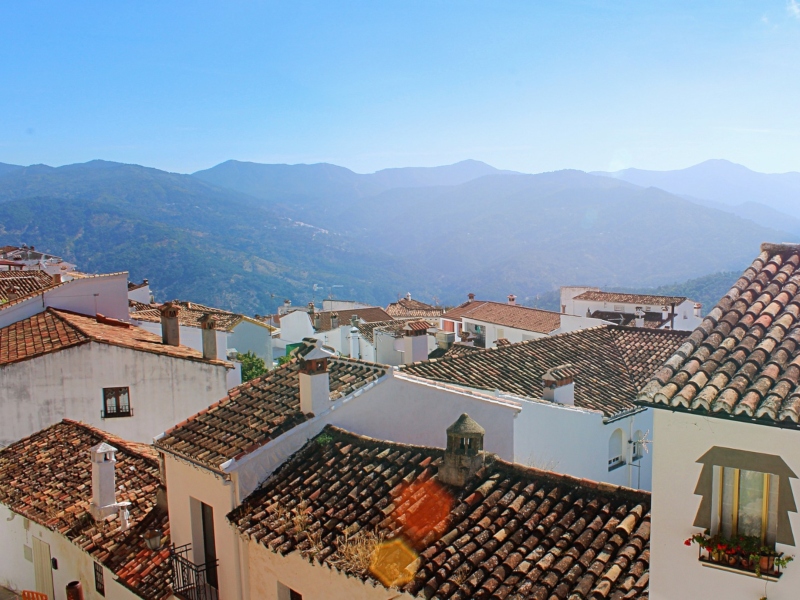
The strangest of the villages. The houses are built underneath an overhanging rock shelf, so the mountain is the roof. Entire streets lie in the shadow of stone.
It was not done for effect — using the cliff was cheaper than building a roof. The village has been there since the 1400s.
6. Zahara de la Sierra
White houses on a steep cone beneath a Moorish castle ruin, with a turquoise reservoir below. It is the image people have in mind when they say "white village".
The castle was taken by Christian forces in 1483, and that triggered the final campaign against Granada.
7. Grazalema
Set in the natural park of the same name, and the wettest place in all of Spain. That makes the mountains green rather than brown. A good base for walking, and known for wool blankets and goat cheese.
8. The wine from Ronda
Vine growing has returned to the area over the last twenty years, after lying dormant since the 1800s. The altitude gives cool nights and wines with more acidity than the rest of Andalucía. Several of the bodegas receive visitors.
«Nothing conceals the gorge. You walk out onto the bridge, look down, and understand why people built here.»
Getting there on your own
For Ronda alone there is a train from Santa Justa in Seville. It takes around three hours and runs through the mountains — one of the most beautiful rail journeys in Spain. Only two or three departures a day, so check the return before you set off.
The Damas coach takes two and a half hours from Plaza de Armas. By car it is 1 hour 45 minutes, and the last forty kilometres are winding mountain road.
The villages require a car
This is what decides how you plan the day. You can reach Ronda by public transport. The villages you cannot — between Zahara, Grazalema and Setenil there is one bus a day, in some places none, and they do not connect with each other.
To see both Ronda and two or three villages in one day you need a car or an organised tour. If you hire a car, the route Seville, Zahara, Grazalema, Ronda, Setenil and back is around five hours of driving in total.
What to expect of Ronda
Ronda is a small town of thirty-five thousand people, and it takes twenty minutes to walk across it. It sits 750 metres above sea level, so it is cooler than Seville — noticeably so in winter, and a blessing in summer.
The town gets a lot of day visitors, and between eleven and four it is crowded around the bridge. Come early or stay into the afternoon and you have it almost to yourself.
The two halves
- El Mercadillo, north of the bridge — the bullring, the shops, the hotels and most of the town. The Alameda del Tajo is here too, the park looking out over the gorge.
- La Ciudad, south of the bridge — the Moorish quarter, oldest and quietest, with the palaces, the Arab baths and Santa María la Mayor.
- Below — the paths down into the gorge on both sides. The one from the north side gives you the bridge from underneath.
Food and markets
Ronda has no large food market, but there is a small municipal market in the Mercadillo where the locals shop. The mountain food here is different from Seville: heavier, more meat, less fish.
What to try is rabo de toro, the oxtail stew that is the town’s dish, and mushrooms if you are there in October or November. Chorizo and cheese from Grazalema, which is known for both. And payoyo, a goat cheese from the mountains you find everywhere in the area.
The wine from Ronda is worth a stop. Vine growing has returned over the last twenty years, and the altitude gives cooler nights and fresher wines than the rest of Andalucía. Several bodegas receive visitors if you have a car.
Mistakes people make
- Only walking across the bridge. The view from underneath is what people remember. Take the path down.
- Expecting to reach the villages by bus. It cannot be done in a day. Car or organised tour.
- Arriving in the middle of the day. Between eleven and four the bridge is packed. Early morning or late afternoon.
- Dressing as for Seville. 750 metres of altitude means ten degrees colder in winter, and wind all year.
- Wearing sandals down into the gorge. The path is steep and loose with gravel.
- Distance from Seville: about 130 km, 1 h 45 min each way
- How long: A full day. An organised tour runs 10–11 hours
- The villages: They are spread out — without a car an organised tour is the simplest way
- Best season: March–June and September–October. Winter can be cold and foggy at altitude
- Altitude: Ronda sits at 750 metres. Bring one layer more than in Seville
- Shoes: The path down into the gorge is steep and loose with gravel
The villages are spread across the countryside and hard to reach without a car. Our partner runs a tour covering Ronda and several of the villages on the same day, with pickup in Seville.
See dates and pricesFrequently asked questions
Around 1 hour and 45 minutes each way by car or coach.
Yes, an organised day trip covers Ronda and two or three villages. It makes for a long day, around 10 to 11 hours.
Zahara de la Sierra is the most photogenic, with its castle ruin and reservoir. Setenil de las Bodegas is the most unusual, with houses built under the cliff.
It makes it far easier. Public transport between the villages is very limited, so without a car an organised tour is the practical option.