For many years I found Semana Santa mostly overwhelming. Then I became a guide and had to learn the history behind each individual procession. That was when I understood what I had been standing in the middle of.
Why it is overwhelming the first time
The city changes completely during Holy Week. The streets fill with people standing shoulder to shoulder for hours, drums and brass come from directions you cannot see, it smells of wax and incense everywhere, and you can find yourself stuck in a crowd unable to move on.
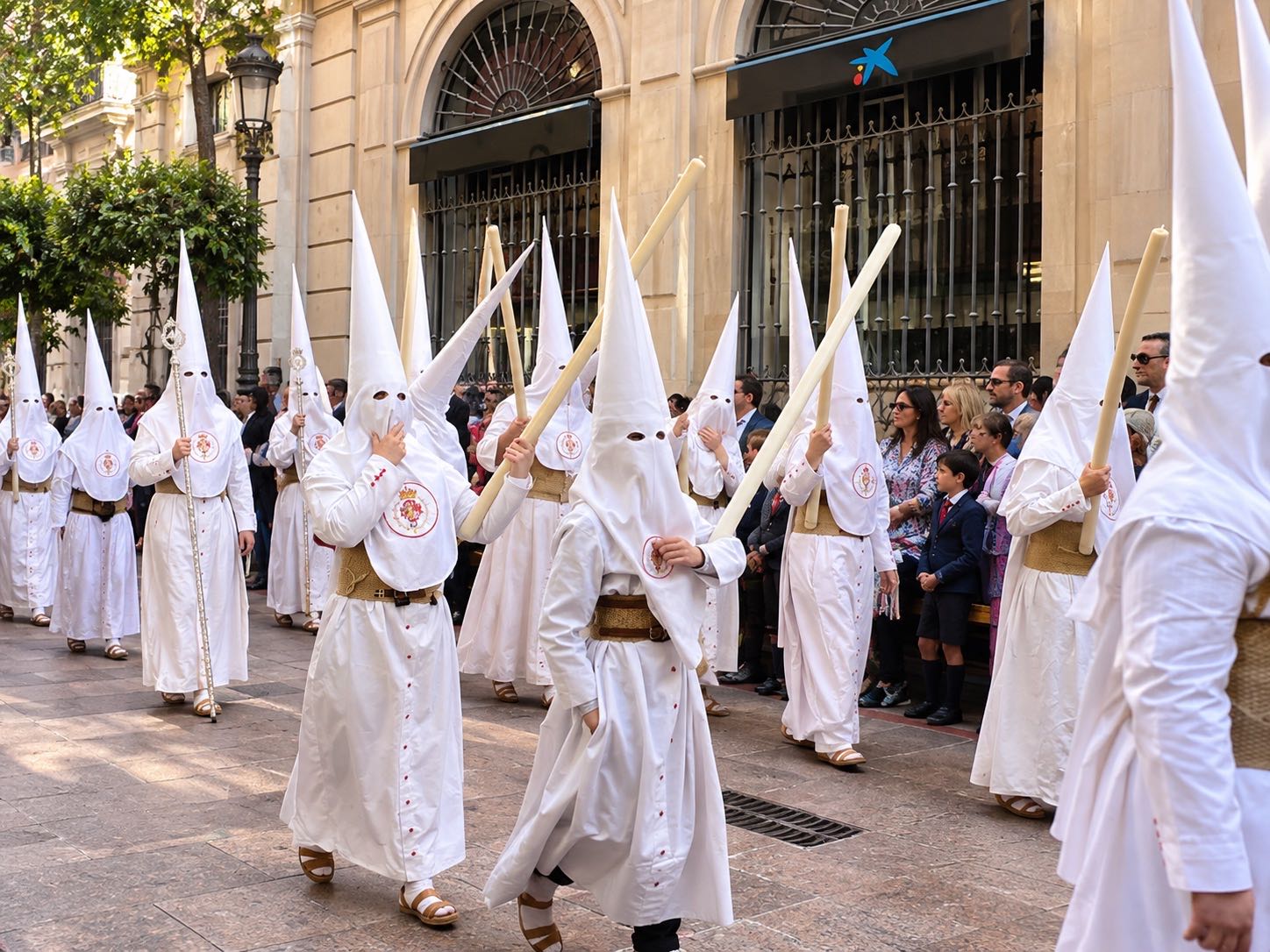
And then there are the pointed hoods. Nazarenos, the robed figures with the tall pointed hood covering the face, walk in long lines carrying candles. For a northern European it is an image that is hard to take in without thinking of something else entirely, and it is worth saying clearly: it has nothing to do with that. The hood is medieval penitential dress. It hides the face because repentance is meant to be anonymous.
I remember that for the first few years I mostly kept away. There were too many people, too much noise, and I did not understand what I was looking at.
What changed it for me
When I became an officially licensed guide, I had to learn this properly. Which brotherhoods walk on which day, which church they come from, which figure they carry, who carved it and when.
And that was when it became interesting. Because it is not one procession — it is sixty-six independent brotherhoods, each with its own history, its own colours, its own music and its own reputation in the city. Some date from the 1300s. Some have members in the fifth generation. Some are known for walking in silence, others for the saeta sung from a balcony as they pass.
Once you know who is coming, it stops being a crowd. It becomes a story you can follow. And that is how I see Semana Santa now: as one of the richest parts of Seville’s cultural heritage, not as something to be endured.
How it all fits together
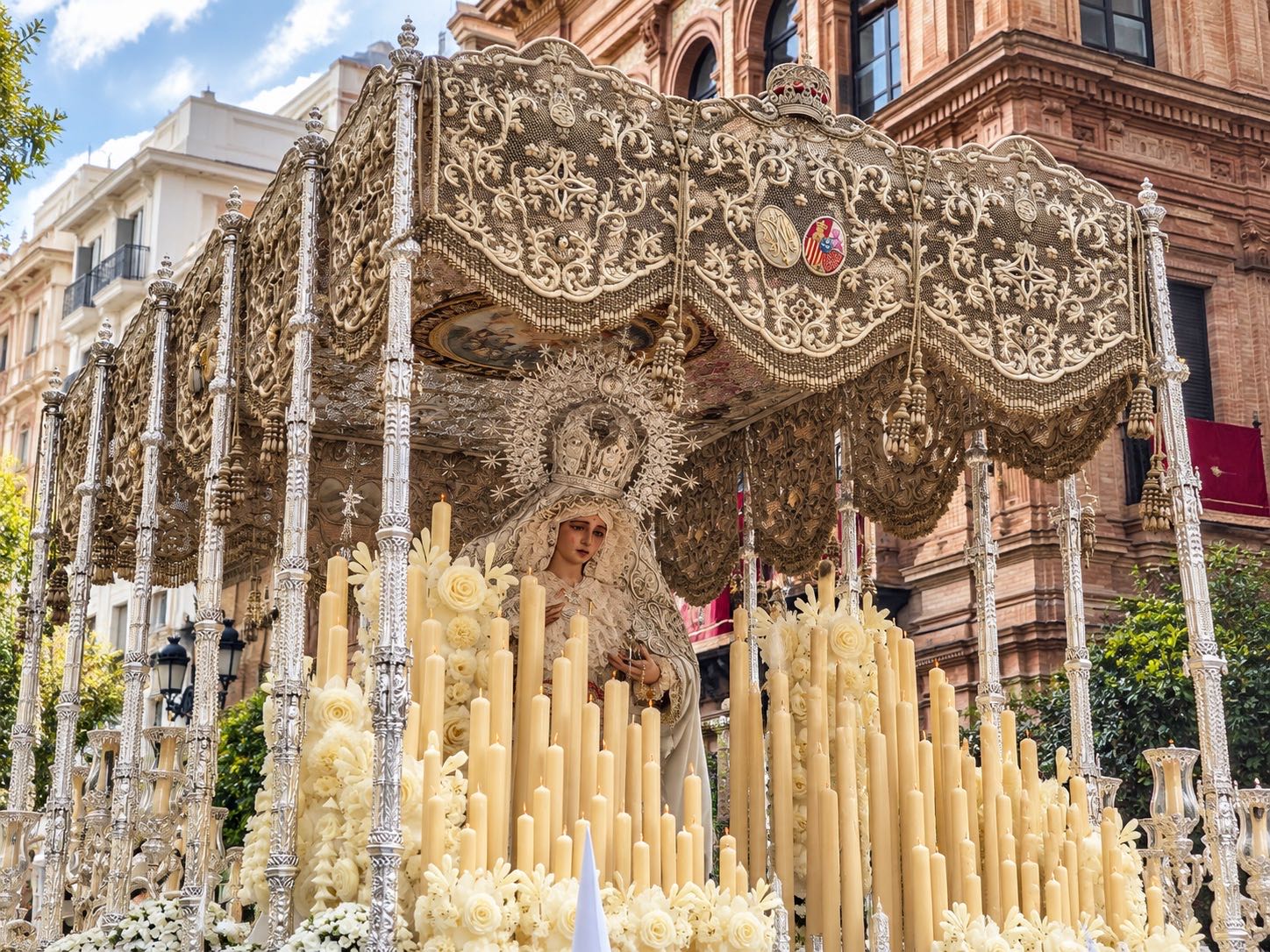
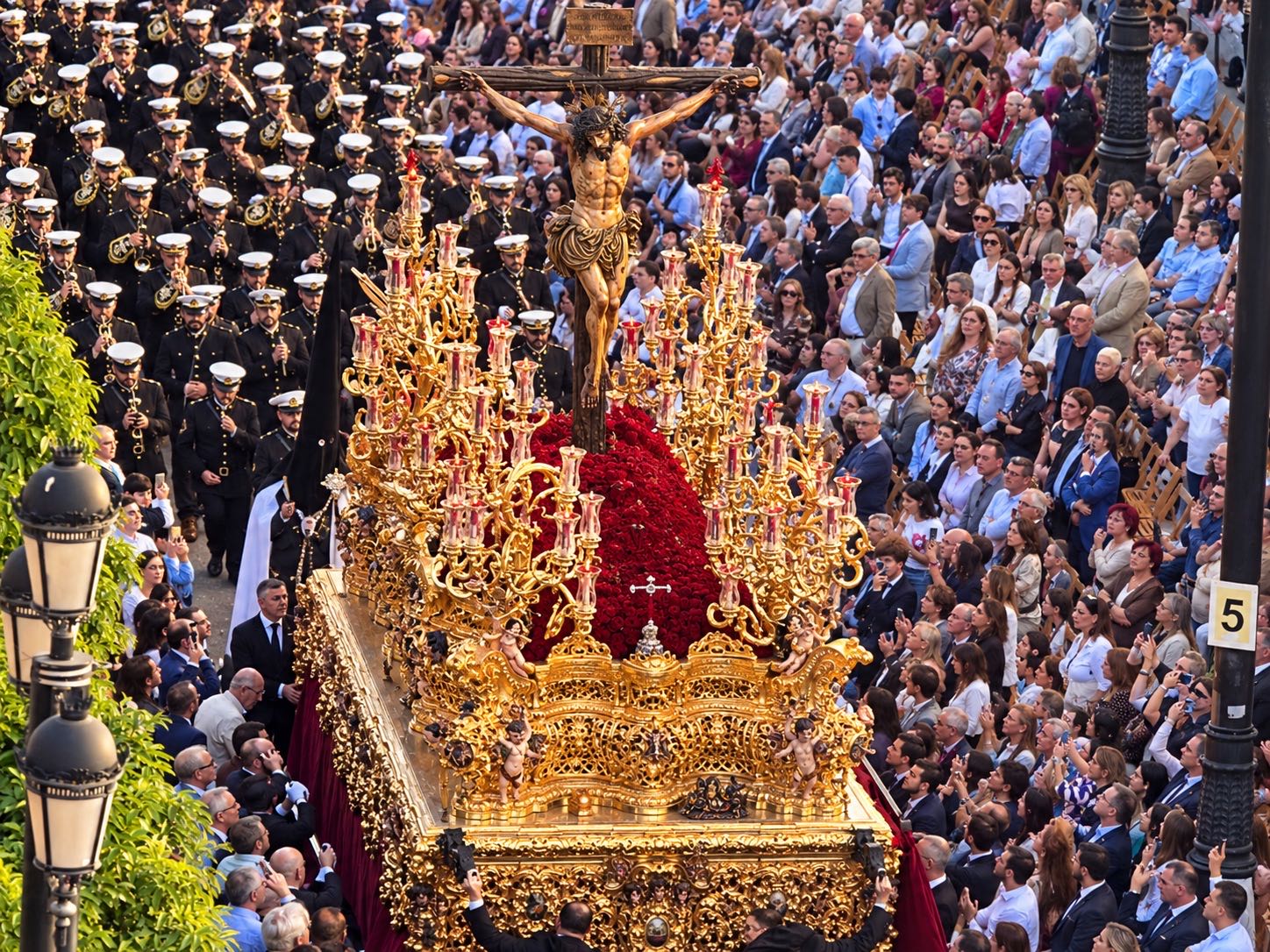
Each brotherhood — hermandad or cofradía — carries two platforms, pasos. The first shows a scene from the Passion. The second carries the Virgin Mary, always under a canopy of velvet and silver, her mantle embroidered in gold.
The platforms are carried by costaleros, men hidden underneath the cloth. They see nothing. A foreman outside strikes a bell and steers them with his voice. A paso can weigh more than a tonne, and they carry in shifts for many hours.
Behind each paso comes a band. The marches were written for this and for nothing else, and people here recognise them from the first few bars.
Every brotherhood sets out from its own church, walks what is called la carrera oficial — the official route into the cathedral — and back home again. Some take fourteen hours over the journey.
The rhythm of the week

It begins on Palm Sunday, with processions that are often the brightest and most family-centred of the week. Children take part, and the mood is almost cheerful.
As the week goes on it grows heavier and more solemn. Wednesday and Thursday see some of the best-known brotherhoods.
The night between Maundy Thursday and Good Friday is called La Madrugá, and it is the heart of the week. That is when El Silencio walks in complete silence, and Jesús del Gran Poder, and La Macarena, and Esperanza de Triana. People stay up all night. The city does not sleep.
Good Friday afternoon and Saturday are quiet and empty by comparison. On Easter Sunday one procession walks, the Resurrection, and then it is over.
How I would follow it
Do not try to see everything. That is the single biggest piece of advice I have. Pick one brotherhood, find out when it leaves its church, and stand there in good time. Watching a paso come out through a church door that is only centimetres taller than it is, is something entirely different from watching one pass in a crowded street.
Avoid the carrera oficial unless you have a seat ticket. That is where it is most crowded and where you see least.
The side streets of Santa Cruz and Triana are better. There the procession comes close, and you hear the drums long before you see anything.
Bring patience and little luggage. You will be standing still for a long time, and you will have to take detours because the routes close off the city.
And watch the people around you, not only the pasos. Grandmothers in tears, children collecting wax from the candles into big balls, men who have walked with the same brotherhood for forty years. That is where the week really lives.
On being an outsider
You do not need to be Catholic to get something out of this. I am not, and I have got an enormous amount out of it.
But it helps to meet it as what it is: a religious act, not a parade. People are not standing there to be entertained. Some walk barefoot for hours because they promised to. It is fine not to understand it — it is not fine to laugh at it.
So: dress properly, do not talk loudly when a paso passes, and do not step into a procession’s path to take a photograph. Then you are welcome.
“For a long time I thought it was one big festival. It is not. It is sixty-six different stories passing through the city one after another.”
- When: Palm Sunday to Easter Sunday. The dates move with Easter each year
- Number of brotherhoods: 66, spread across the eight days of the week
- The heart of the week: La Madrugá, the night between Maundy Thursday and Good Friday
- Programme: Routes and times are published a few weeks beforehand. There are free pocket programmes and apps
- Seats: Seats along the official route are sold well in advance and go quickly
- Practical: Much of the centre is closed to cars, and streets are blocked without warning. Expect to walk
- Dress code: Not shorts and beachwear. Sevillians dress smartly all week
Semana Santa gives far more when someone tells you who is coming and why they walk the way they do. I take English-speaking guests during Holy Week, and I can set up an evening where we follow one or two brotherhoods and you get the story behind them. Let me know early — the week fills up fast.
Send me a messageFrequently asked questions
From Palm Sunday to Easter Sunday, so the dates move each year. Feria de Abril follows two weeks later.
Yes. Everything happens in the streets and is open to all. Only the seats along the official route cost money, and they are sold long in advance.
Members of the brotherhood walking in penitential dress. The hood covers the face because repentance is meant to be anonymous. The robe is medieval and has no connection to anything else you might be reminded of.
The platform carried through the streets. Each brotherhood has two: one with a scene from the Passion and one with the Virgin Mary under a canopy. A paso can weigh over a tonne and is carried by men hidden beneath the cloth.
Palm Sunday is the brightest and easiest to start with. La Madrugá, the night between Maundy Thursday and Good Friday, is the most intense — but then nobody sleeps. Wednesday and Thursday are a good middle ground.
Not on the official route without a ticket. Better: outside the church where the procession starts or ends, or in a narrow side street in Santa Cruz or Triana.
Yes, many Sevillian children take part all week and collect wax from the candles. But the late night processions are long and crowded, and I would not take small children to those.
Partly. The cathedral has restricted access on several of the days, and streets close without warning. If you want to combine Semana Santa with ordinary sightseeing, the programme has to stay flexible.
Yes. Send me a message well in advance — Holy Week is one of the busiest of the year.