
Tapas and flamenco are the two things everyone wants in Seville, and the two things easiest to get wrong. Both exist in tourist versions right by the cathedral, at double the price and half the quality. This evening does both properly, in the order they should be experienced.
1. Why the two belong together
Tapas and flamenco grew up in the same place at the same time: in the taverns of Seville and Cádiz in the 1800s. People sat with a drink and something to eat, and someone sang. One was not entertainment for the other — they were the same evening.
Flamenco has roots among the gitanos, in Moorish and Jewish music, and in the Andalusian countryside. Seville, Cádiz and Jerez are considered the three places the form took shape. UNESCO added flamenco to its heritage list in 2010.
Tapas has a simpler history than the legends suggest: small dishes that came with the drink, in a country where people rarely drink without eating. The word means "lid", and most explanations of why are after the fact.
2. How the evening works

The first stop is an old-fashioned gourmet grocer, where the evening opens with Spanish cured meats, montaditos — small sandwiches — and a glass of beer, wine or sweet vermouth. This is where the guide gives you the background, both on the food and on the flamenco you are about to see.
Then on into the old Jewish Quarter, to one of the district’s oldest bars. Iberian ham, croquetas, spinach with chickpeas, and a glass of manzanilla alongside. After that it is showtime.
After the performance the evening ends the way Sevillanos end it: a last stop at an old winery turned tapas bar, with a glass of sweet orange wine — a local speciality you rarely find outside Andalucía.
Three stops in the historic centre in all, eight-plus tastings and a couple of drinks. It amounts to dinner — you do not need to eat before or after.
3. The flamenco show
The performance is held in an Andalusian patio inside an 18th-century palace, one of the few remaining authentic flamenco venues in the historic centre. No microphones, no elaborate staging — song, guitar, clapping and dance, with the audience a few metres away.
It is improvised. The dancers follow the singing, and the singing follows the mood that night. No two performances are the same, and that is why it works: you are watching something happen, not something repeated.
The group is small, twelve people at most, and the ticket is included. You are spared working out which tablaos are real and which are set up for coach parties.
4. What you eat
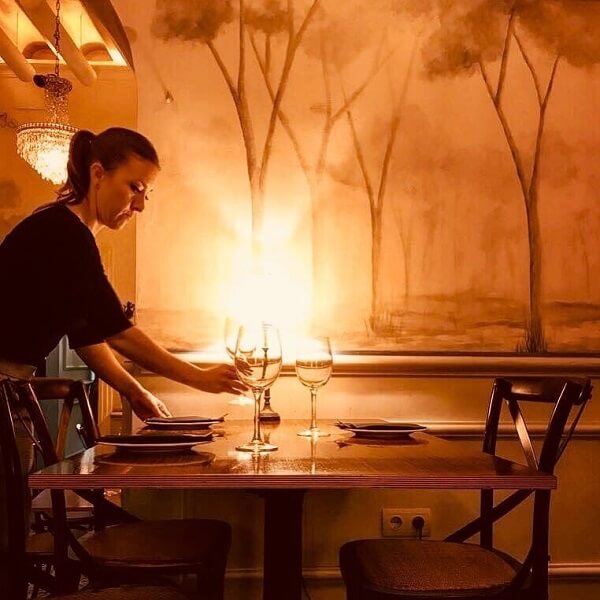
It varies with the evening and which bars are on form, but expect the classics: Iberian ham, spinach with chickpeas, croquetas, cheese, olives. With local wine — Seville drinks more sherry and Andalusian white than people assume.
Vegetarian, pescatarian, gluten-free and dairy-free can be accommodated, and there are non-alcoholic options. Say so when you book, not on the night.
5. How to tell the real thing from the tourist trap
This is the part you actually take home. The guide explains what to look for, both in a tapas bar and in a flamenco venue.
At the bar: are locals standing there, or only people with maps? Is the menu in four languages with photographs? Is the ham carved by hand?
At a flamenco venue: a room that seats a hundred and runs three shows a night gives you choreography. A room that seats forty, with a singer who can see the audience, gives you something else. Price does not always tell you which one you are in — the room does.
6. Who it suits
It works well on your first evening in the city, because you get both the food and the culture explained before you head out on your own for the rest of the stay.
The show makes the evening mostly one for adults, though older children are welcome. The group is small enough that you can ask whatever you like along the way.
The tour runs in English. If you would like the same evening privately for your party, with me guiding, send me a message.
«Flamenco was not made for the stage. It was made in courtyards and kitchens, which is why it works best in a small room.»
- Duration: About 3 hours, in the evening
- Group size: Maximum 12 people
- Stops: Three stops in the historic centre
- Included: Eight-plus tastings, a couple of drinks, and the flamenco show ticket
- Language: English. Private tours available on request
- Diet: Vegetarian, pescatarian, gluten-free and dairy-free can be accommodated — state when booking
Book tapas and flamenco with our partner. Transparent pricing — the same price as booking direct.
See dates and pricesFrequently asked questions
About three hours, in the evening. Three stops for tapas and an hour-long flamenco show.
Yes. Eight-plus tastings across three bars, plus shared plates at the end. Most people do not need to eat again that evening.
Twelve at most. The flamenco venue is small, and the group is kept small deliberately.
The show is held in an Andalusian patio inside an 18th-century palace, with song, guitar and dance and no microphones. That is the form flamenco began in.
Yes. Vegetarian, pescatarian, gluten-free and dairy-free can be accommodated, and there are non-alcoholic options. Say so when you book.