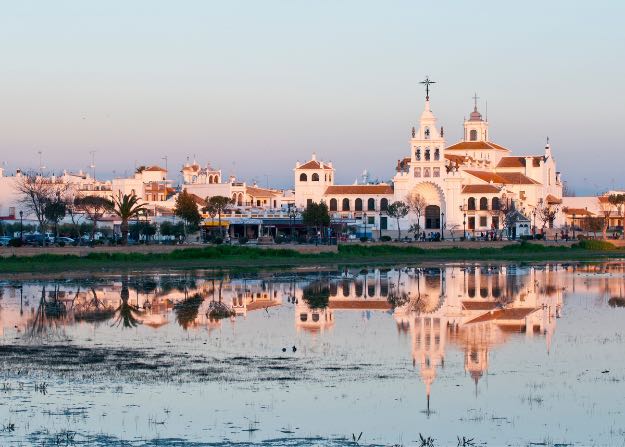
An hour southwest of Seville, where the Guadalquivir meets the Atlantic, lies an area of more than 500 square kilometres of lagoons, dunes and pine forest. Six million birds use it as a staging post between Europe and Africa every year. It is also the last place the Iberian lynx lives in the wild.
1. What Doñana is
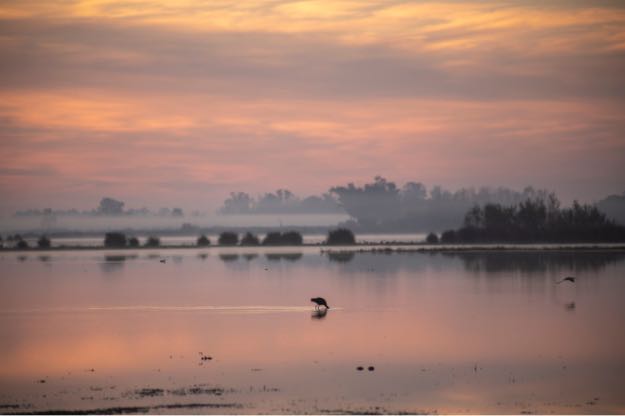
The delta where the Guadalquivir reaches the sea. In winter the marismas — the flat plains — fill with water and become an enormous shallow lake. In summer they dry out into cracked clay. That alternation is what makes the place so rich.
A UNESCO World Heritage site since 1994. The area was protected in 1969, after plans to drain it for rice fields and hotel development came close to going ahead.
2. The birds
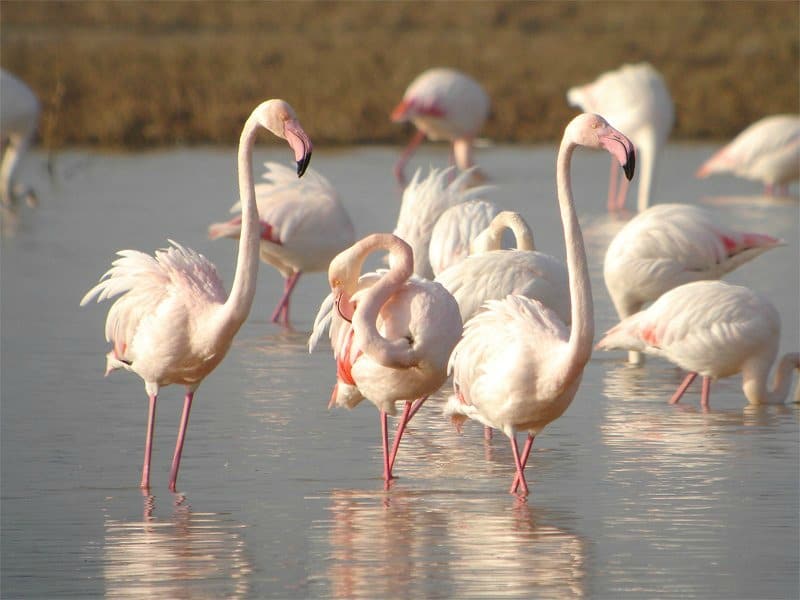
Six million birds pass through each year. Flamingos in their thousands, spoonbills, grey and little egrets, kites and imperial eagles. In winter the lagoons fill with geese and ducks from northern Europe.
The Spanish imperial eagle exists only on the Iberian peninsula, and Doñana is one of its last strongholds. Around twelve pairs nest here.
3. The Iberian lynx
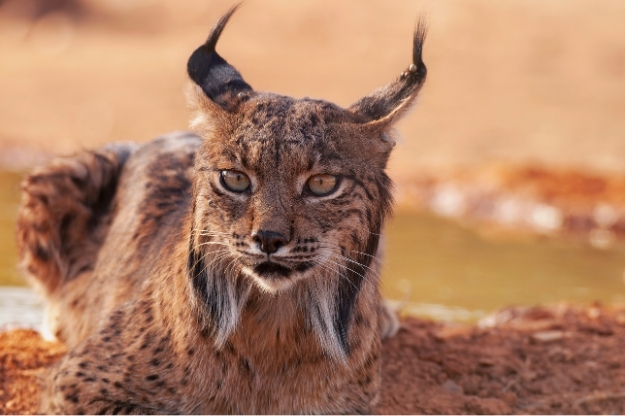
The most endangered cat in the world. In the 2000s the population was down to under a hundred animals in total, all in Doñana and the Sierra Morena. After twenty years of breeding programmes the number is over two thousand.
Your chance of seeing one is slim — it is nocturnal and shy. But it is there, and you can find the tracks.
4. The wild horses and cattle
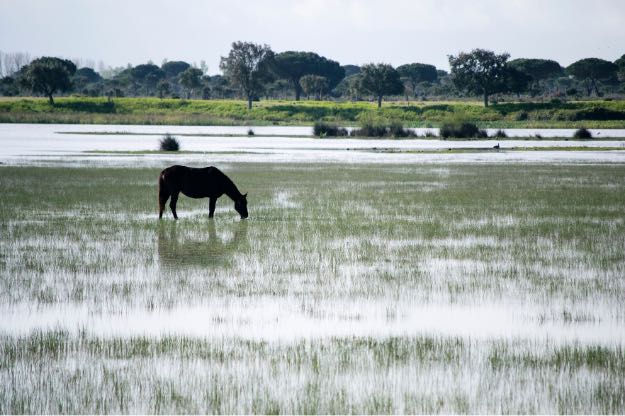
The marismeña horses live semi-wild in the wetlands. Every year in late June the Saca de las Yeguas drives the horses out of the park into the town of Almonte to be counted and sold — a tradition dating from 1504.
Retinta cattle also graze freely in parts of the park.
5. The dunes
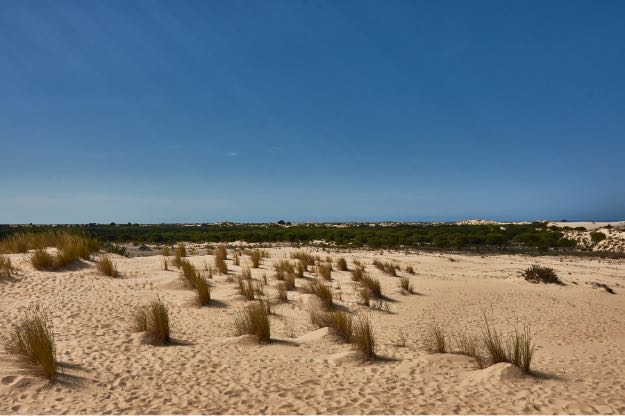
Along the coast large dunes move inland, a few metres a year, burying the pine forest as they go. Dead crowns stick up out of the sand in formations called corrales.
6. El Rocío
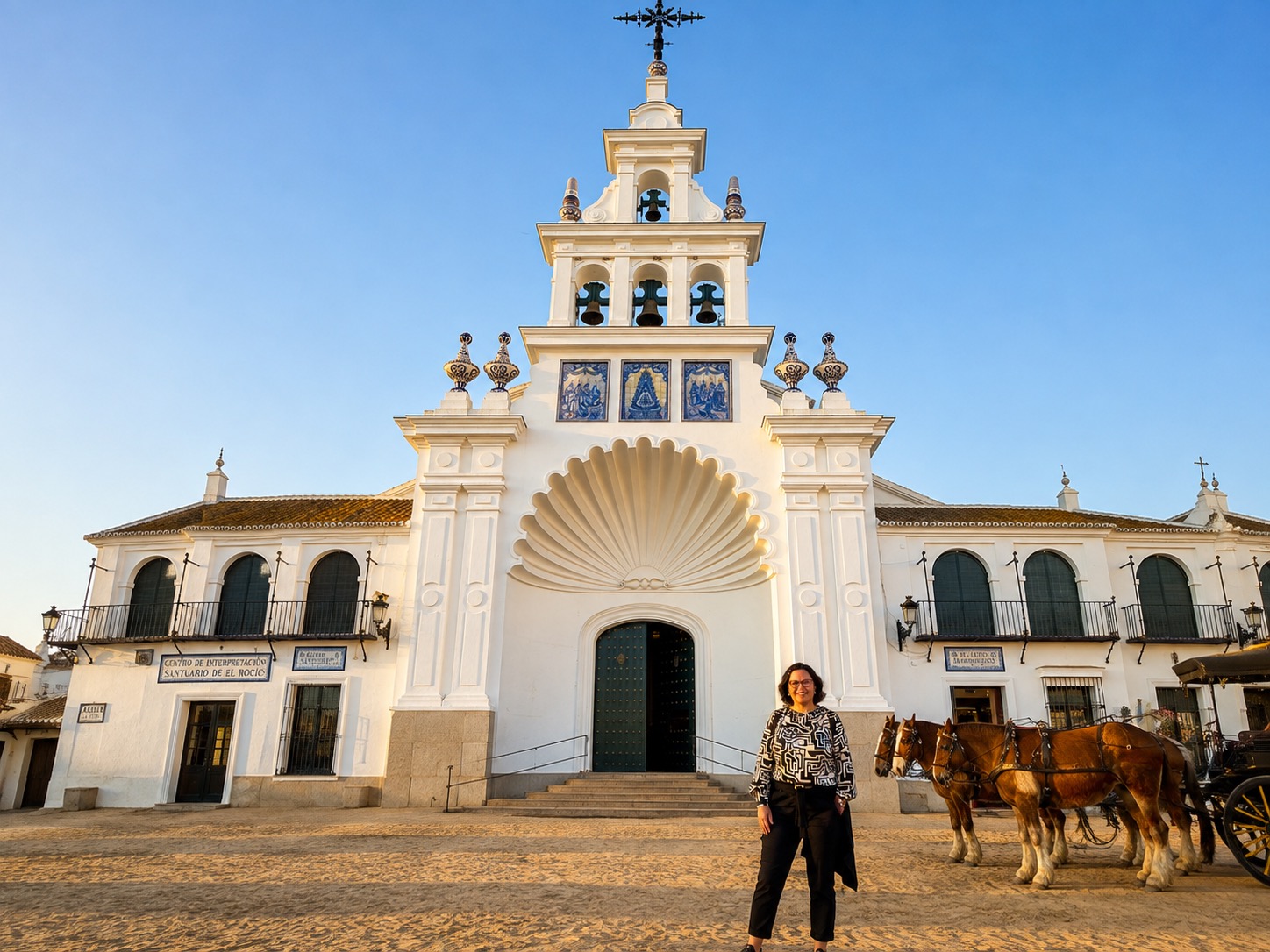
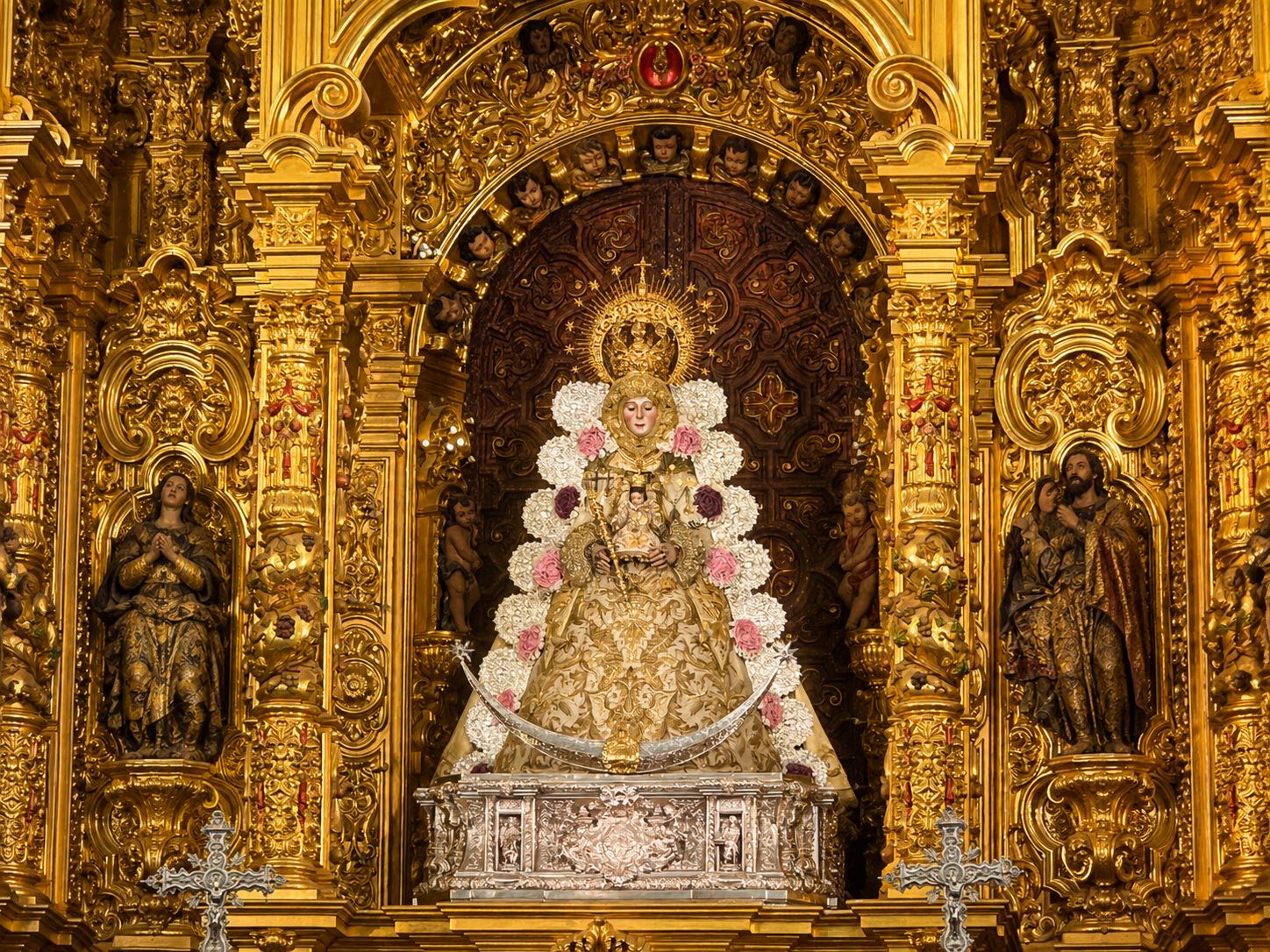
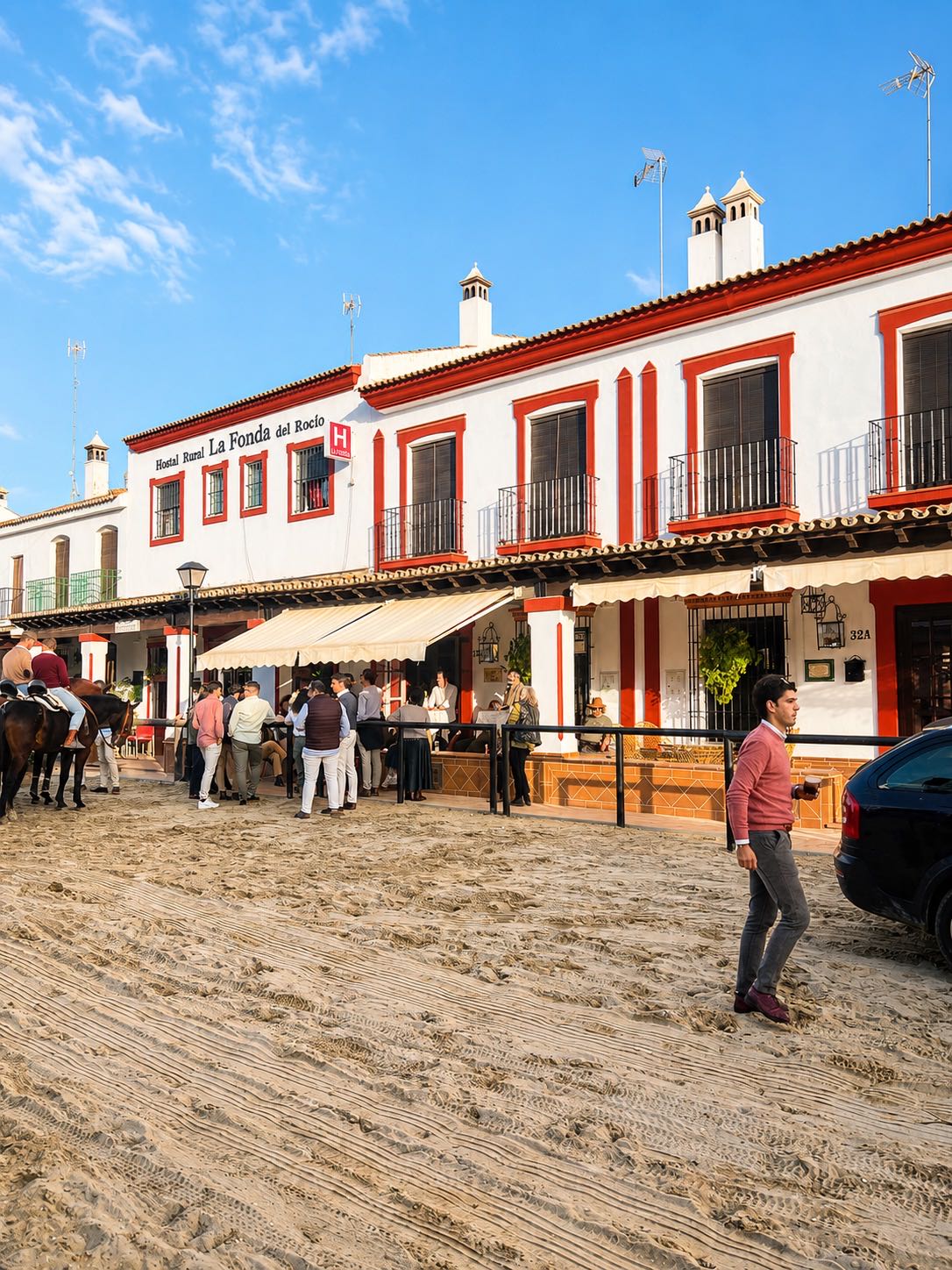
The village on the park’s northern edge has sand streets instead of asphalt, because people arrive on horseback. At Whitsun up to a million pilgrims gather here, in Spain’s largest religious procession.
The rest of the year the village is almost empty, with a view over the lagoon from the church square. It is one of the strangest places in Andalucía.
7. How you get in
Large parts of the park are closed to general access. You enter by guided four-wheel drive from Matalascañas or El Rocío, or on marked trails from the visitor centres.
The La Rocina and El Acebuche visitor centres are free and have bird hides. Acebuche is where the lynx information is.
«Doñana is not spectacular the way a mountain peak is. It is quiet, flat, and you have to look — but what is there exists nowhere else.»
Getting there on your own
Doñana is the closest of all the day trips, but the hardest to do without an arrangement — because the problem is not the transport, it is the access.
By car it is an hour from Seville to El Rocío on the A-49 and A-483. The Damas coach runs to Matalascañas and El Rocío several times a day from Plaza de Armas, and takes around an hour and a half.
How you get into the park
The core area is closed to general access. You cannot drive in, and you cannot walk in. There are three ways:
- A guided four-wheel drive from El Acebuche or Matalascañas. Four hours, running morning and afternoon, and it must be booked ahead. This is the only way into the reserve itself.
- The visitor centres — El Acebuche, La Rocina and Palacio del Acebrón. Free, open to all, with marked trails and bird hides looking out over the lagoons. You see a great deal from here.
- A boat from Sanlúcar de Barrameda on the southern side, up the river and into the delta. A different perspective, but further to reach.
If you come by car on your own, the combination that works is: the La Rocina visitor centre in the morning when the birds are active, El Rocío in the middle of the day, and the bird hides at Acebuche in the afternoon.
What to expect
Doñana is not spectacular the way a mountain or a cathedral is. It is flat, quiet and understated, and you have to look. Come expecting a safari and you will be disappointed. Come with binoculars and patience and you see things you see nowhere else in Europe.
The landscape changes completely through the year. In winter and spring the marismas are under water and full of birds. In summer they dry to cracked clay, and then there is little to see. That is why timing matters more here than on any other day trip.
The different landscapes
- Marismas — the flat wetlands, flooded in winter. This is where the birds are.
- Cotos — sandy ground with scrub and pine forest, where the lynx and the deer live.
- The dunes — shifting sand dunes along the coast that gradually bury the forest behind them.
- El Rocío — the village with sand streets and the white church, looking out over the lagoon.
- Matalascañas — the coastal town to the south, a starting point for tours and with a long beach.
Food
This is not the region of food markets, but there is something to be had. The coast here produces prawns from Huelva that are among the best in Spain, and coquinas, small clams fried with garlic.
Inland gives you game and meat stews. And an hour away lies Jabugo, where the finest Iberian ham in the country is made — if you are passing, it is worth a stop.
In El Rocío you eat simply, in bars that live off pilgrims and local riders. Not gastronomy, but proper food.
Mistakes people make
- Coming in July or August. The wetlands are dry, the birds gone, and the heat sits still. October to April is the time.
- Expecting to drive in yourself. The core area requires a guided four-wheel drive, booked in advance.
- Coming without binoculars. The birds are far off. Without them you see dots.
- Expecting to see a lynx. It is nocturnal and shy. Assume you will not see one, and be delighted if you do.
- Travelling at Whitsun. El Rocío is then filled with up to a million pilgrims and practically impossible to reach.
- Going out in the middle of the day. The birds are active early morning and late afternoon.
- Distance from Seville: about 90 km, around 1 hour each way
- Best season: October to April. The lagoons are full and the migrating birds are there
- Bring: Binoculars. Without them you see far less
- Access: The core area requires a guided four-wheel drive tour
- Summer: July and August are hot, dry and poor for birds. Postpone if you can
- Whitsun: El Rocío is almost inaccessible during the romería — check the dates
Doñana needs a vehicle that can enter the park and a guide who knows where the birds are that day. Our partner runs day trips from Seville with four-wheel drive inside the park.
See dates and pricesFrequently asked questions
It is Europe’s most important wetland, with six million migrating birds a year, and the last place the Iberian lynx lives in the wild. A UNESCO World Heritage site since 1994.
October to April. The lagoons are full of water and the migrating birds are in place. In summer the wetlands dry out.
It lives there, but the chance of seeing one is slim. It is nocturnal and shy. The population has grown from under a hundred animals in the 2000s to over two thousand today.
No, the core area requires a guided four-wheel drive tour. The visitor centres and some marked trails are open to all.