
Jerez gave sherry its name — the word is the English attempt at saying Jerez. An hour further south lies Cádiz, founded by the Phoenicians around 1100 BC and therefore the oldest continuously inhabited city in Western Europe. Two entirely different places on the same day.
1. How sherry came to be
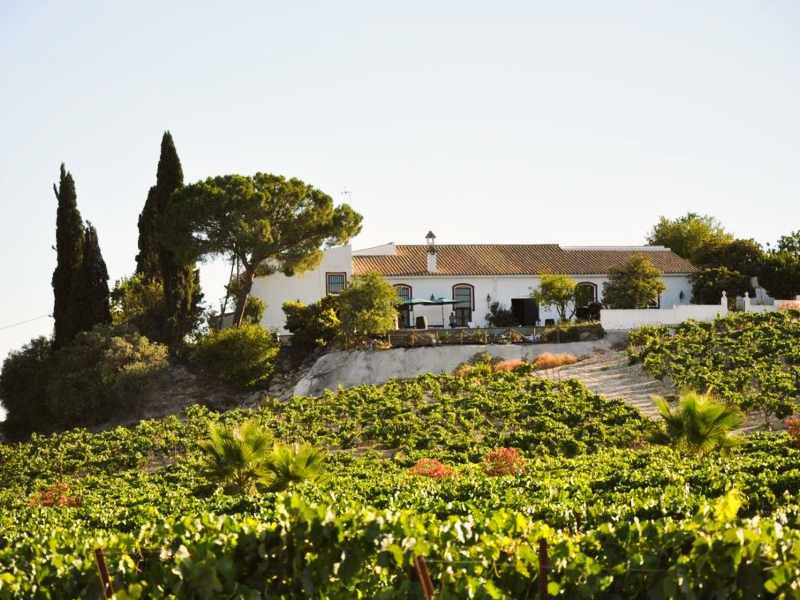
Wine from Jerez has been an export since Roman times, but what made it famous was the British. From the 1500s English trading houses bought up bodegas, and the names are still there: Osborne, Terry, Williams & Humbert, Harveys.
The method is called criaderas y soleras. The wine is moved gradually between rows of casks, from the youngest to the oldest, and a cask is never emptied completely. So every bottle holds a little wine from each year going back — in some bodegas as far as the 1800s.
2. Visiting a bodega

Cathedral-like halls with casks stacked three high, and light deliberately kept low. You taste your way through the types: fino dry and light, amontillado nutty, oloroso dark, Pedro Ximénez so sweet it is almost syrup.
The albariza soil does it. Almost white with chalk, it reflects sunlight and holds winter moisture right through the summer.
3. The Andalusian horses
The Real Escuela Andaluza del Arte Equestre in Jerez is one of the world’s four classical riding schools. The show is called "Cómo bailan los caballos andaluces" — how the Andalusian horses dance.
It runs Tuesdays and Thursdays, sometimes Fridays. Check before you travel, as it is the main reason many people come.
4. Flamenco from Jerez
Along with Seville and Cádiz, Jerez is one of the three birthplaces of flamenco. The form called bulería comes from here, and the Santiago district is where the families who developed it lived.
A major flamenco festival is held in Jerez in late February and early March.
5. Cádiz: the old city
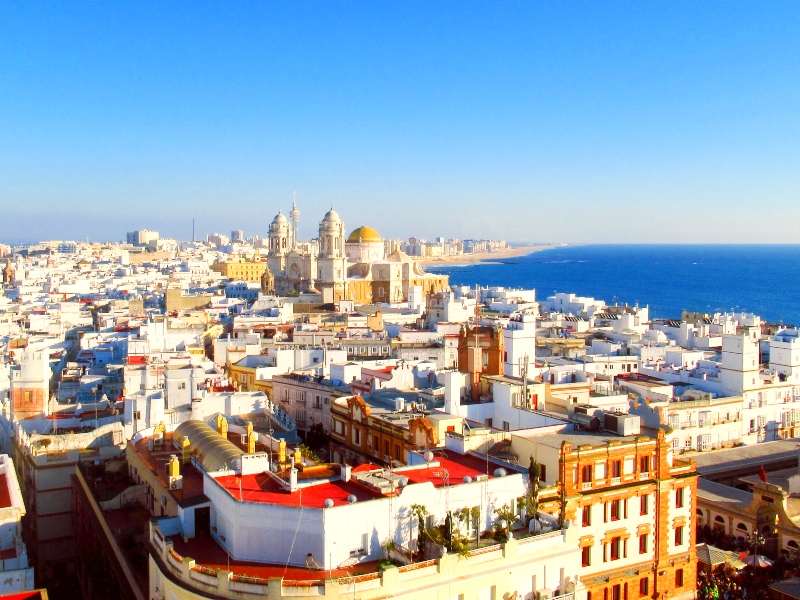
The old town sits on a peninsula so narrow you can see the sea in three directions. The Phoenicians called it Gadir, the Romans Gades. The city has been there for three thousand years.
Climb the cathedral’s Poniente tower. From up there you see the whole peninsula, the golden dome below you, and the Atlantic all around.
6. The sea and the beaches
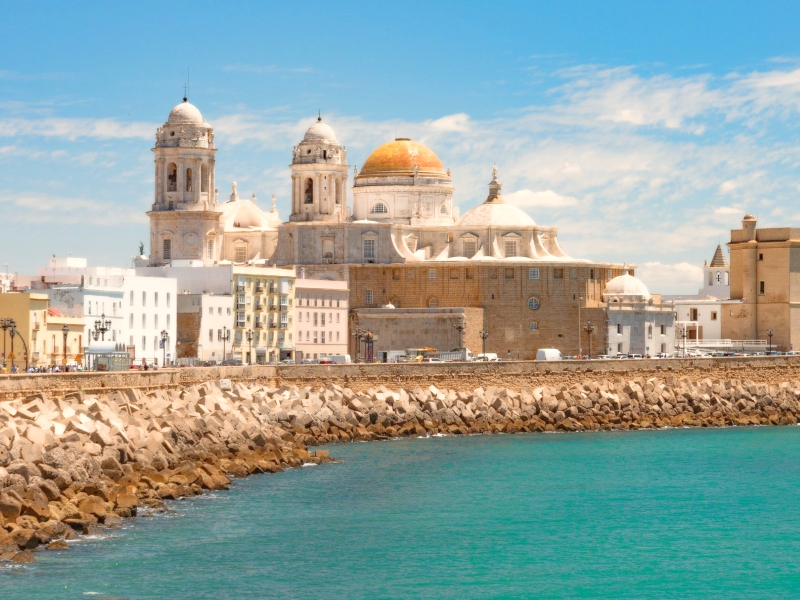
La Caleta is the small city beach between two forts, and the most photographed. Playa de la Victoria is the long one, where the locals actually swim.
Cádiz is also where you get the best fried fish in Spain. Buy it in a paper cone from a freiduría and eat it walking.
7. Carnival
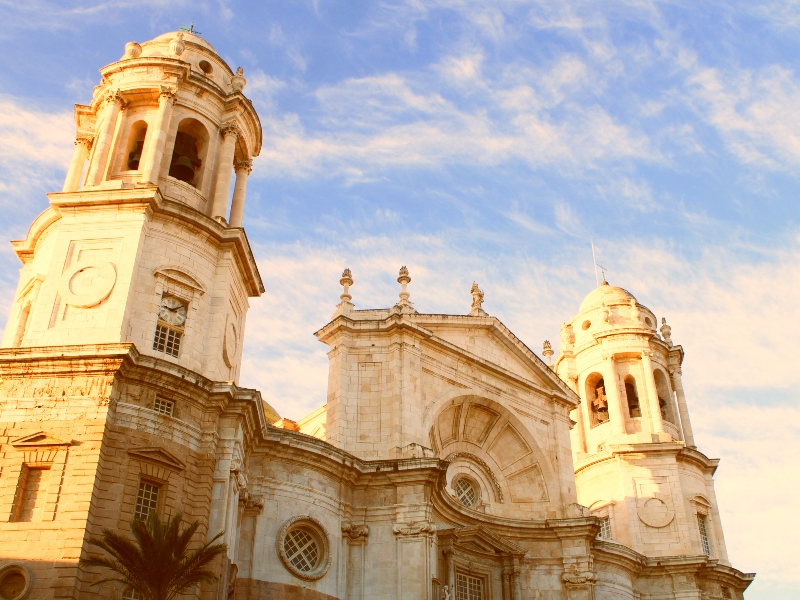
The carnival in Cádiz in February is the biggest in Spain, and nothing like Rio. It is about singing — groups called chirigotas write satirical songs about the year just gone and perform them in the streets. Politicians and celebrities are not spared.
«In Cádiz people face the sea. In Seville we only have the river, and you can tell in the temperament.»
Getting there on your own
This is the easiest of all the day trips to do yourself, because the train goes straight there. The Rodalies C1 line from Santa Justa in Seville stops in Jerez after about an hour and in Cádiz after an hour and a half. It runs roughly every hour all day, and you do not need to book ahead.
From Jerez station it is a ten-minute walk into the centre. In Cádiz the station sits right by the old town, so you step out and you are there.
The order that works: an early train to Jerez, a bodega and possibly the horse show in the morning, the train on to Cádiz around lunch, the afternoon and early evening there, and home. By car it is an hour to Jerez and twenty minutes further.
Bodegas and horses must be booked
The large bodegas receive visitors at fixed times and you have to sign up in advance. Tio Pepe, Lustau and Sandeman run tours in English several times a day. Allow an hour and a half.
The horse show at the Real Escuela normally runs Tuesday and Thursday, in some periods Friday as well, and starts mid-morning. The dates change through the year, so check realescuela.org before planning your day. If there is no show, you can watch the training and see the stables instead.
What to expect
Jerez
Jerez is bigger than people think, over two hundred thousand people, but the old town is small and calm. The city lives off three things: sherry, horses and flamenco, and all three are real here, not staged for visitors.
The area around Plaza del Arenal and the cathedral is where you walk. The bodegas are scattered around the centre, some within walking distance. The Santiago district is where the flamenco families live, and where the bulería form was born.
Cádiz
Cádiz is something else entirely. The old town sits on a peninsula with sea on three sides, and you notice it immediately — the air is saltier, the light sharper, and people are more outgoing than inland. The city has three thousand years behind it and carries them lightly.
The quarters you walk: Barrio del Pópulo, the medieval core; La Viña, the old fishermen’s quarter with the best places to eat; and Santa María, where the flamenco comes from. All within a twenty-minute walk.
Food and markets
The Mercado Central de Abastos in Cádiz is one of the best food markets in Andalucía. The fish comes in the same morning, and around the hall are stalls that fry whatever you point at. Go there for lunch.
What to eat in Cádiz is fried fish — cazón en adobo, marinated shark; tortillitas de camarones, thin fritters with tiny shrimp; and puntillitas, baby squid. Buy it in a paper cone from a freiduría and eat it walking.
Jerez is different: sherry with the food, and dishes that can take it. Riñones al jerez, kidneys in sherry, and berza, a hearty stew. The tomato soup here is called ajo caliente and is served hot, not cold.
Mistakes people make
- Going to Jerez without checking the horse show. It only runs two or three days a week, and the dates shift.
- Turning up at a bodega unannounced. They receive visitors at fixed times and by booking.
- Assuming sherry is sweet. Most types are bone dry. Fino and oloroso have nothing to do with dessert wine.
- Having lunch in Jerez. Wait for Cádiz, where the fish is better and cheaper.
- Travelling in February without knowing about the carnival. It is wonderful, but the city is full and the trains packed.
- Distance from Seville: Jerez about 90 km (1 hour), Cádiz about 125 km (1 h 20 min)
- How long: A full day. Both places in one day is busy but works
- The horses: The show in Jerez runs Tuesday and Thursday, some Fridays. Check dates first
- Bodegas: Most require booking ahead for a tour
- Best season: All year. Cádiz has a milder summer than Seville because of the sea
- Tip: The grape harvest in Jerez is in August, earlier than the rest of Europe
Jerez and Cádiz lie in the opposite direction from my own tours, and I do not run them myself. Our partner runs a day trip that includes a bodega visit in Jerez and time in the old town of Cádiz.
See dates and pricesFrequently asked questions
Yes. Jerez is an hour from Seville and Cádiz twenty minutes further, so both fit into a day trip.
A fortified wine from the area around Jerez, made from palomino grapes and aged by the solera method. It ranges from bone dry, as fino, to very sweet, as Pedro Ximénez.
The city was founded by the Phoenicians around 1100 BC and is the oldest continuously inhabited city in Western Europe.
Usually Tuesday and Thursday, and in some periods Friday as well. Dates vary through the year, so check before booking.