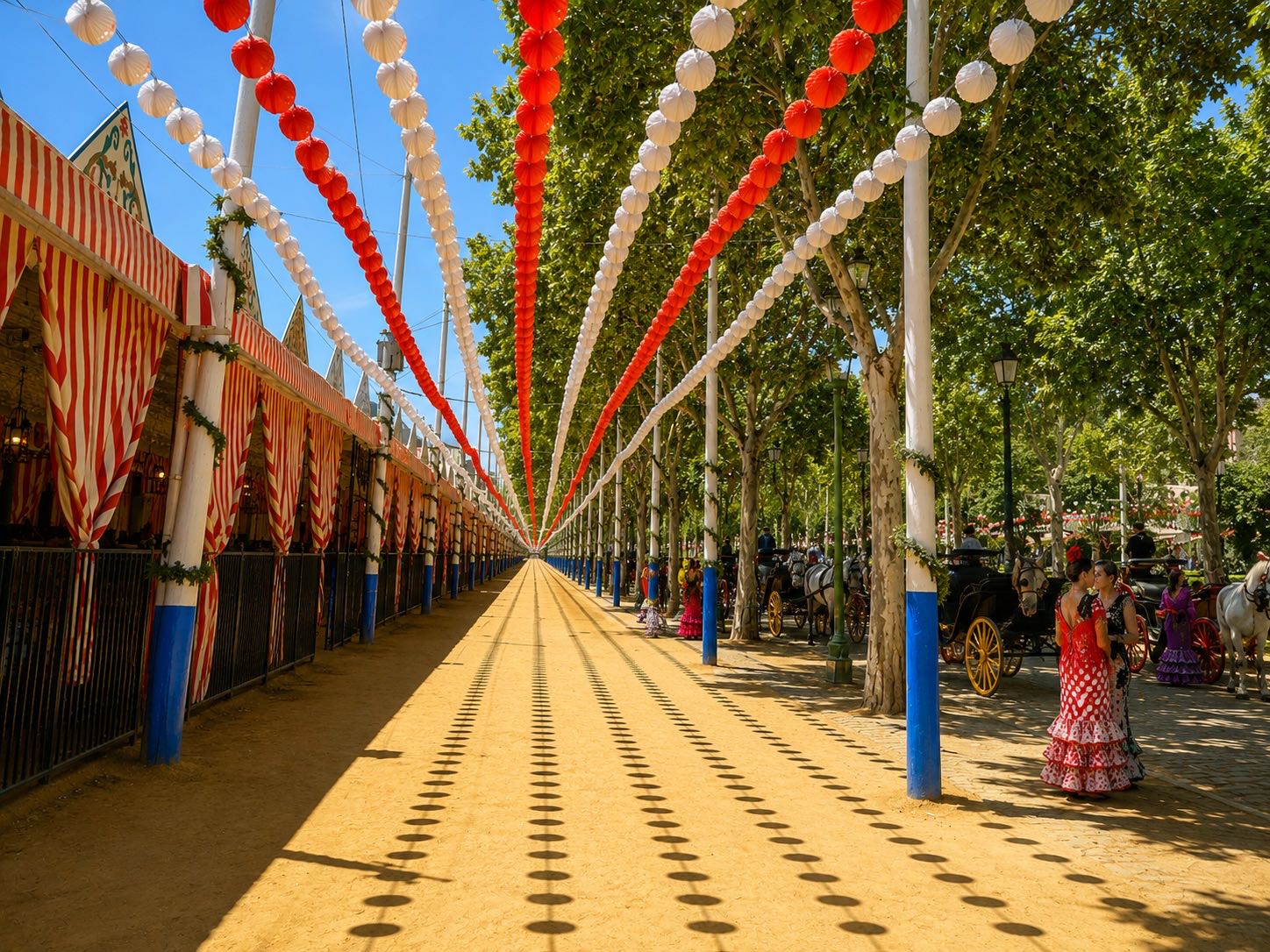
For one week in April the city moves out onto a plain full of lanterns, tents and horses. I have lived here for over thirty years, and I am not the most enthusiastic feria-goer in Seville — but I have learned to find my place in it.
What Feria actually is
Feria de Abril began in 1847 as a cattle market. Farmers came into the city to buy and sell animals, put up tents, and the party that followed eventually became more important than the trade. Today the market is gone and only the party remains — but the horse is still there, and that is no accident.
Everything takes place on a plain in the Los Remedios district, across the river from the centre. A whole city is built there: more than a thousand tents in rows, with street names, street lights and addresses. The week begins on Monday with pescaíto — the evening when everyone eats fried fish in the casetas — and runs until Sunday. Then the whole city is taken down again.
It is worth saying plainly: Feria was not made for tourists. It is the Sevillians’ own party, and that is what makes it so good — and a little hard to get into.
The dresses

What I like best about Feria is dressing up. I have several trajes de flamenca, and the week before I have to decide: which one this year, which earrings, which shawl, which flower in my hair.
There is something freeing about a party where everyone dresses up as much as they possibly can. Nobody thinks you are overdoing it. The women wear dresses with ruffles and long shawls, the men dark suits or riding dress, and the children are dressed like the adults. A whole city that has made itself smart at the same time.
The flower in your hair is supposed to be big. It took me a few years to dare.
Sevillanas — and the course I took
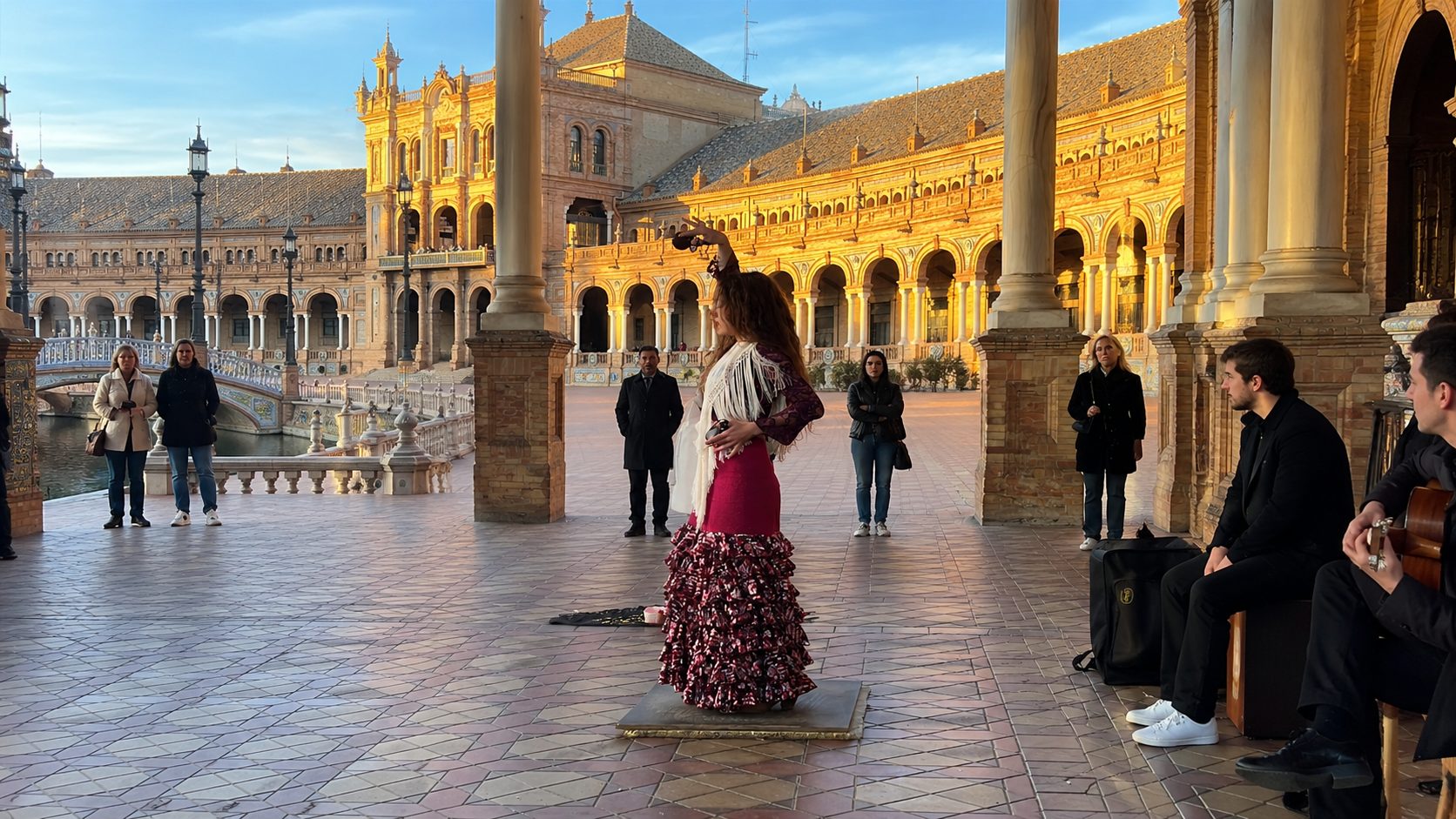
Sevillanas is the dance you dance at Feria. It is not flamenco, though people confuse the two: sevillanas is a folk dance for couples in four parts, and everyone here learned it as a child. Everyone except me.
Last year I signed up for a course. I had stood on the sidelines for many years watching other people dance, and in the end I thought it was time. It was fun, and harder than I expected — there are four parts, and each part has its own figure.
At this year’s Feria I danced. I will not exaggerate how well it went, but I made it through all four parts with the same partner, and that is more than I managed the year before.
The casetas — and the problem with them
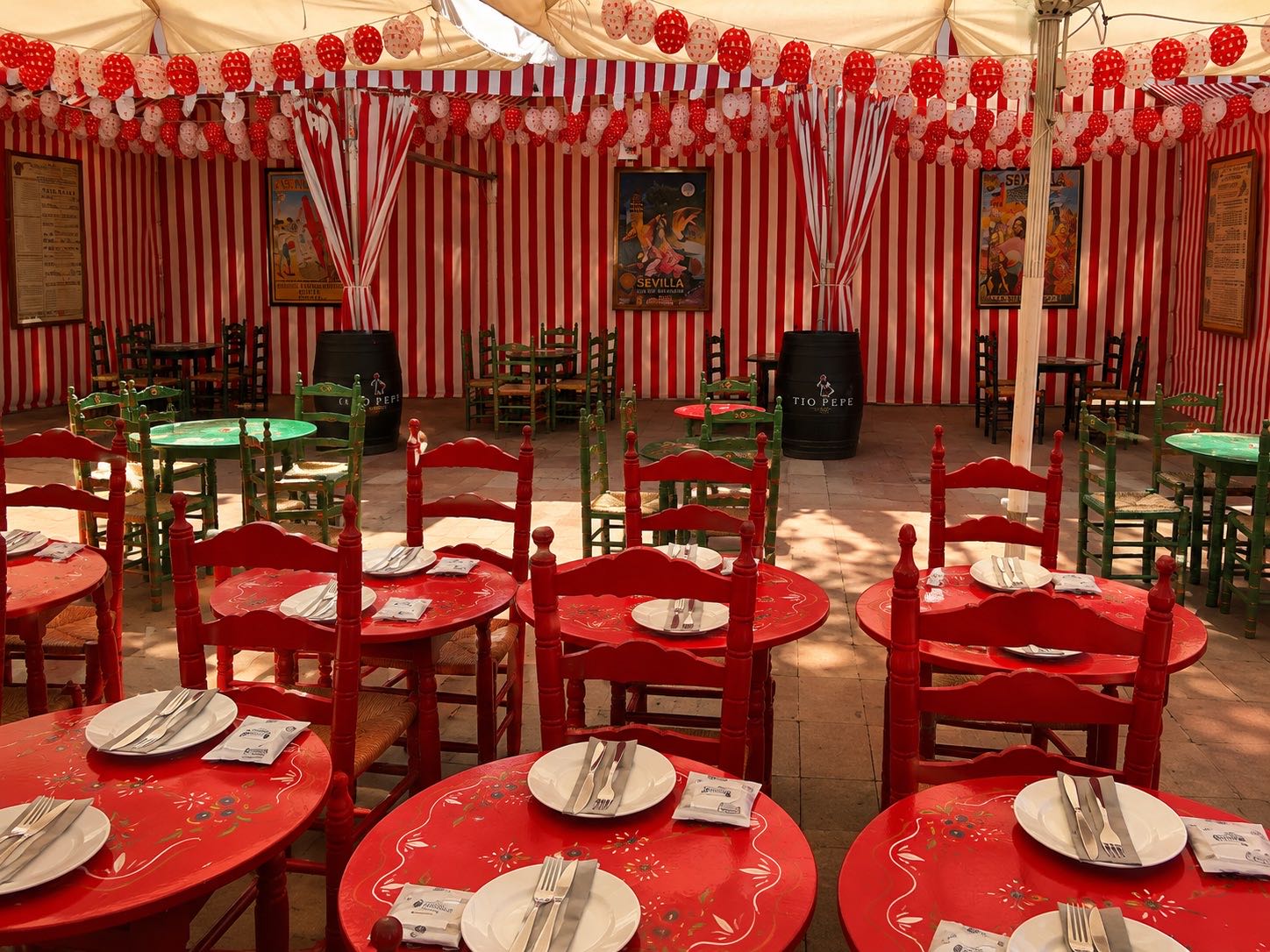
The tents are called casetas. Each belongs to a family, a group of friends, a company or an association, and most of them are private. You do not get in without knowing someone.
This is the one thing tourists are disappointed by, and I understand it well. You stand in a street full of music and laughter, and every door is closed to you. It is not unfriendliness — it is simply a private party that happens to take place outdoors.
But there are public casetas, run by the districts and by political parties and trade unions, and they are open to everyone. They are no worse. The music is the same, the rebujito is the same, and people are welcoming.
What people eat and drink
Rebujito is the drink of Feria: dry manzanilla or fino mixed with lemon soda, plenty of ice, in a tall glass. It is light, it is cold, and it is more dangerous than it tastes.
Pescaíto frito, small pieces of fried fish, is the name of the whole opening evening. The rest of the week it is tortilla, jamón, cheese, olives — things you can eat standing up with a glass in the other hand.
Prices in the casetas are not tourist prices. This is what people eat all week, and it has to be liveable.
The horses and the afternoon
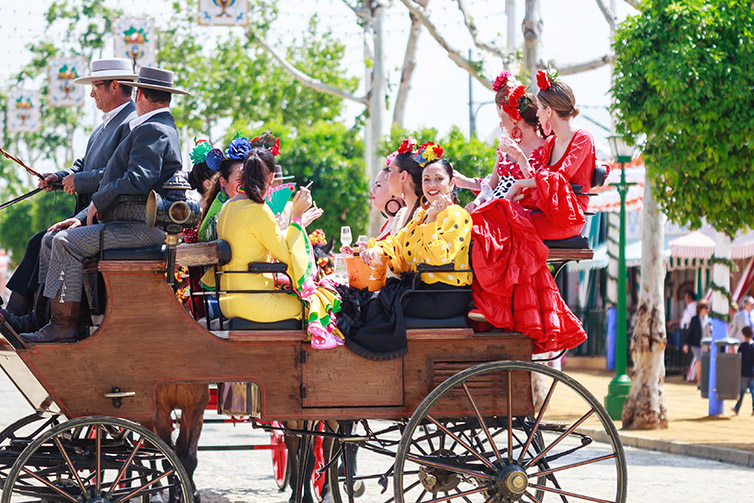
From noon until around five the plain is full of horses. Riders in cordobés hats, women sitting sideways behind the saddle, and carriages with four, five and six horses in harness. This is called the paseo de caballos, and for many it is the most beautiful hour of Feria.
It is also the hottest. Wear a hat if you have one, and stay in the shade between the rows.
After five the street empties of horses and the party moves back into the tents. It lasts far into the night — the casetas often do not close until six in the morning.
If you are coming as a visitor
Come early in the week, not at the weekend. Tuesday and Wednesday the plain is full enough to be beautiful, but not so full that you get pushed around.
Go early in the afternoon for the horses, or after ten at night for the music. Between five and eight it is a little dead.
Do not dress in a flamenco dress unless you have a proper one. Nobody expects it of you, and a cheap carnival version gets noticed. A smart dress or shirt is more than enough.
And a warning about practical matters: the city is half closed all week. Many shops and restaurants in the centre have reduced hours, and people you have appointments with may not be reachable. Plan accordingly.
“Feria is not something you watch. It is something you dress up for and walk into.”
- When: Two weeks after Easter, always in April or early May. The dates move with Easter
- Where: Real de la Feria in Los Remedios, across the river from the centre
- Duration: Monday to Sunday
- The opening: Pescaíto on Monday evening, and the lantern gate is lit at midnight — el alumbrao
- Dress code: None formally, but everyone dresses up. Flamenco dress for the women, suit or riding dress for the men
- Getting there: On foot across Puente de los Remedios, or by taxi. Not by car — there is no parking
- Note: Many shops and offices in the city close or keep short hours all week
Let me know well in advance. Feria week is the busiest of the year, and both hotels and guides are booked out early. I can tell you which days are worth prioritising, and take you around the plain if you want someone with you who knows it.
Send me a messageFrequently asked questions
Two weeks after Easter, so the dates move from year to year. It runs from Monday to Sunday and usually falls in April or right at the start of May.
No. The fairground itself is open to everyone and free. It is the casetas that are private — but the public ones are open, and there you only pay for food and drink.
Into the private ones only if you know a member. The public casetas, run by the districts and by parties and trade unions, are open to everyone.
No. But everyone around you has dressed up, so a smart dress or shirt will make you feel more at home. If you do not have a real traje de flamenca, I would wear something smart rather than a cheap copy.
Manzanilla or fino mixed with lemon soda and plenty of ice. Feria’s own drink, easy to drink and stronger than it tastes.
Yes, especially during the day. There is a funfair — Calle del Infierno — at the edge of the plain, and children are welcome in the casetas. The evening belongs to the adults.
Not quite. Many shops and restaurants keep short hours or close, and it is hard to reach people. If you want to see the monuments in peace, it is actually a good week — everyone else is out on the plain.
Yes, but let me know well in advance. The week fills up long beforehand. Send me a message and we will arrange it.