
Most experiences in Seville are something you look at. This is one you do. You stand on a rooftop in the middle of the city with the Giralda right in front of you, cooking the paella from scratch — and eat it afterwards as the sun goes down behind the cathedral. The terrace takes ten people, no more, and that is the point: you stand at the pan yourself, not behind a crowd.
1. First: paella is not from Andalucía
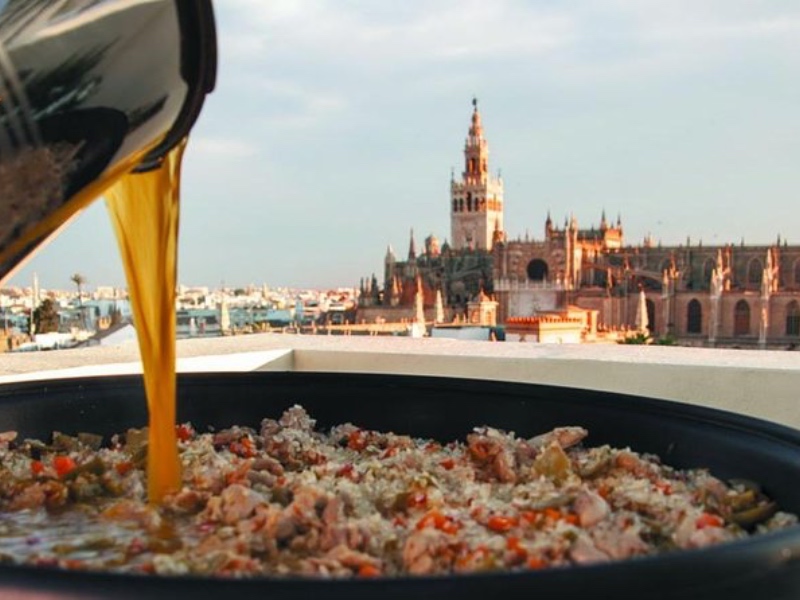
Let us get that out of the way, because it is the first thing a Spaniard will tell you. Paella comes from Valencia on the east coast, where the rice grows in the wetlands around the Albufera. The original version has rabbit and snails in it, not seafood.
So why cook it in Seville? Because it has become Spain’s national dish regardless of where it came from, and because the technique is the same everywhere. Learn it here and you can cook it at home. It is also a good moment to hear why Sevillanos and Valencians argue about what is allowed in the pan.
2. How it works

You meet the chef on the terrace, and he starts by explaining what is in front of you: the rice, the saffron, the sofrito — the base of tomato, pepper and garlic that everything is built on.
Then you cook it. Not watch someone else cook it, but stand at the pan yourself, with a chef explaining as you go. Paella is cooked open and without a lid, and the timing is everything: when the rice goes in, when you stop stirring, when you take it off the heat.
Finally you sit down and eat it, with a glass of wine or sangria. It takes as long as it takes — this is not a tour run by the clock.
3. The view
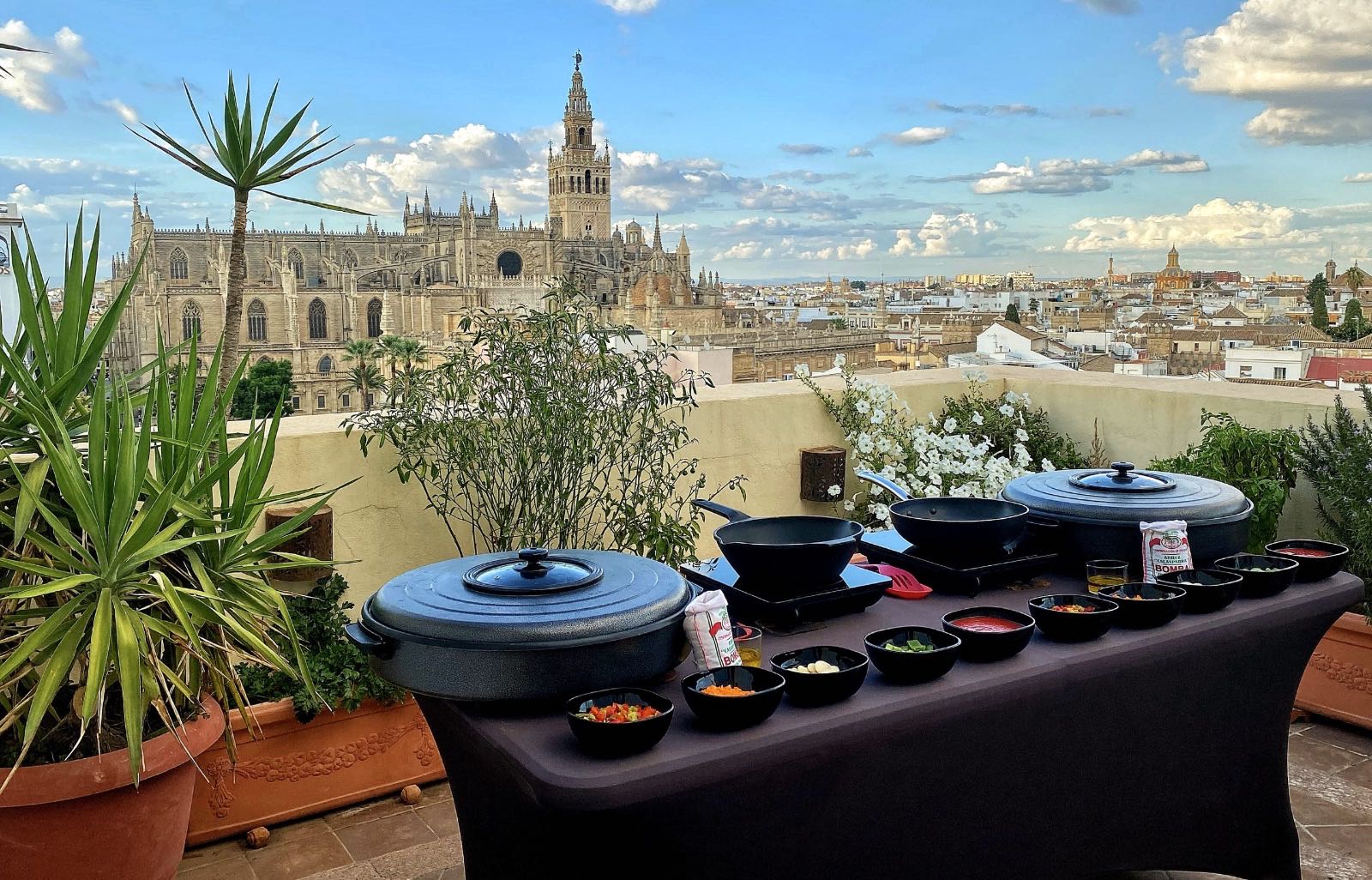
The terrace is in the old town, with the Giralda and the cathedral directly in front. In the afternoon the light sits on the tower, and later it is lit up.
That is the part people remember afterwards: that they stood stirring a paella with Seville’s most famous silhouette ten metres away, while the bells rang.
4. What you cook
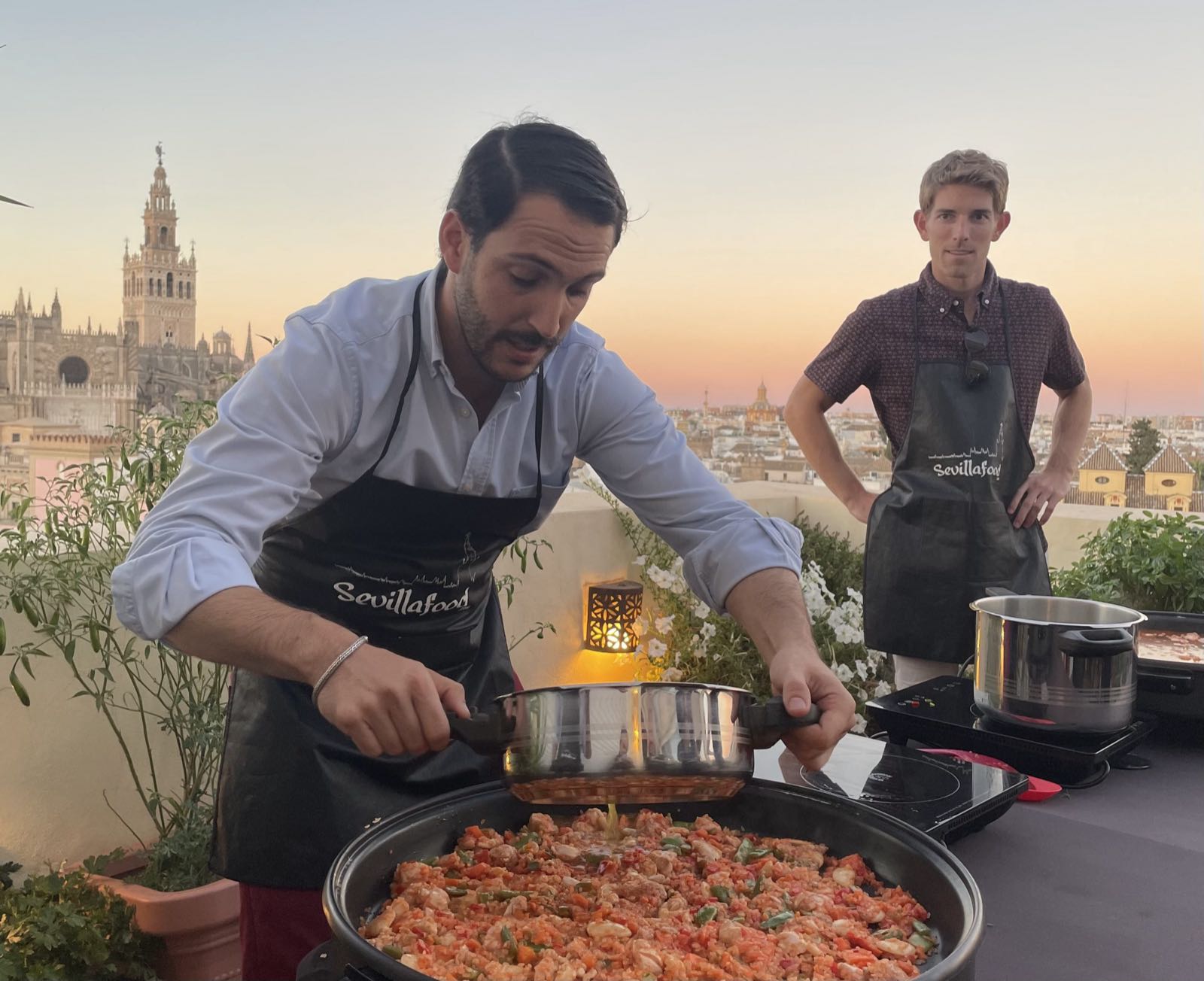
A paella, and everything that goes around it. Usually it starts with something to eat while the rice cooks — some tapas, bread, olives — and a drink alongside.
If there are several of you, you share one large pan, the way it is meant to be eaten. Paella is not portioned food; it goes on the table and everyone eats from their own sector of the pan. It is one of those things you only understand by doing it.
5. The rice is the whole secret
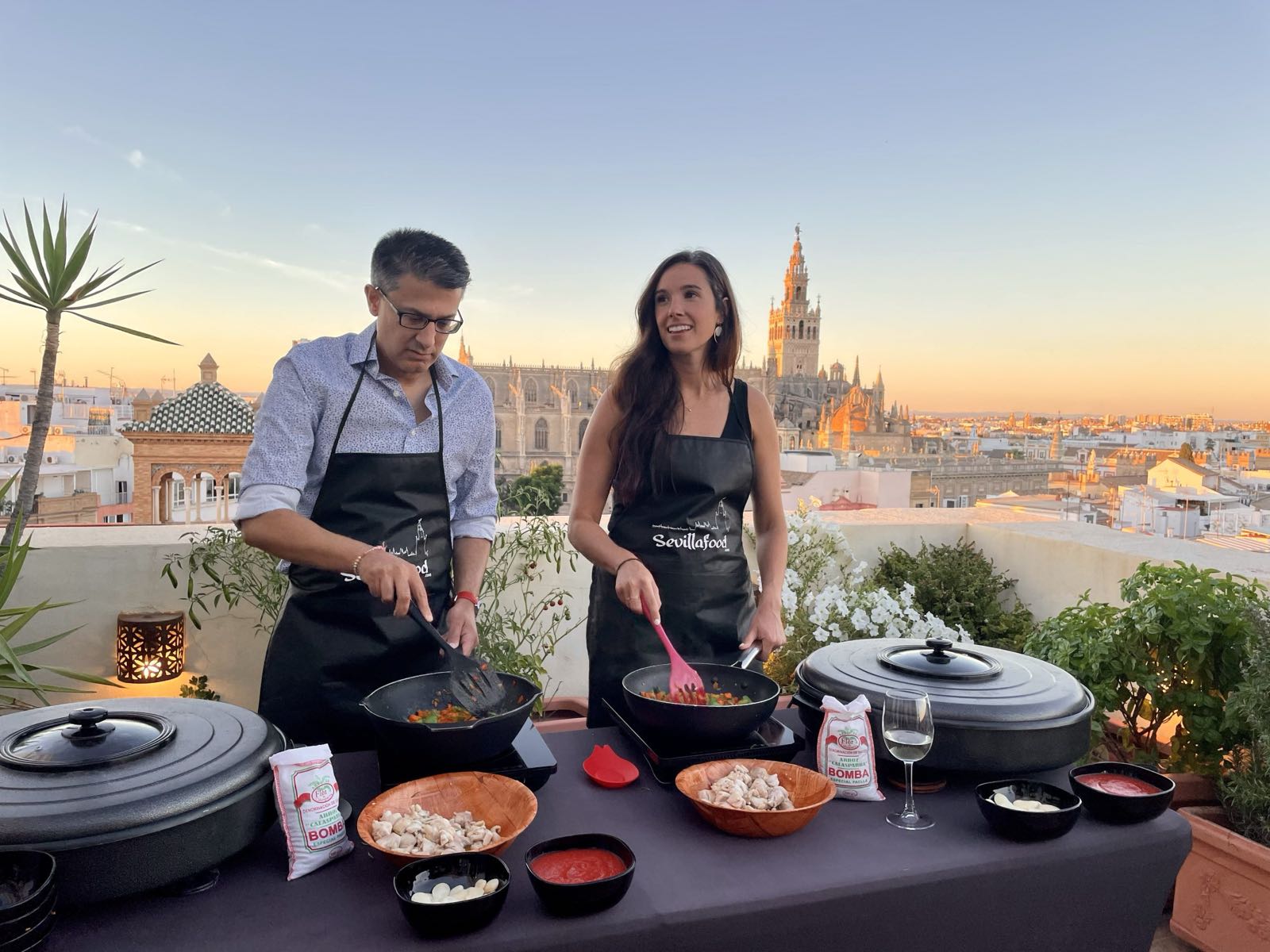
What you actually learn is not the recipe — you can find that online. It is how to handle the rice.
The right rice, bomba or senia, which absorbs liquid without falling apart. The right amount of stock, measured against the pan rather than the rice. And most important: you do not stir. Once the rice is in, you leave it alone, because that stillness is what produces the socarrat — the thin crisp layer at the bottom that Spaniards argue over.
Those are the three mistakes people make at home, and all three get corrected on the spot.
6. Who it suits
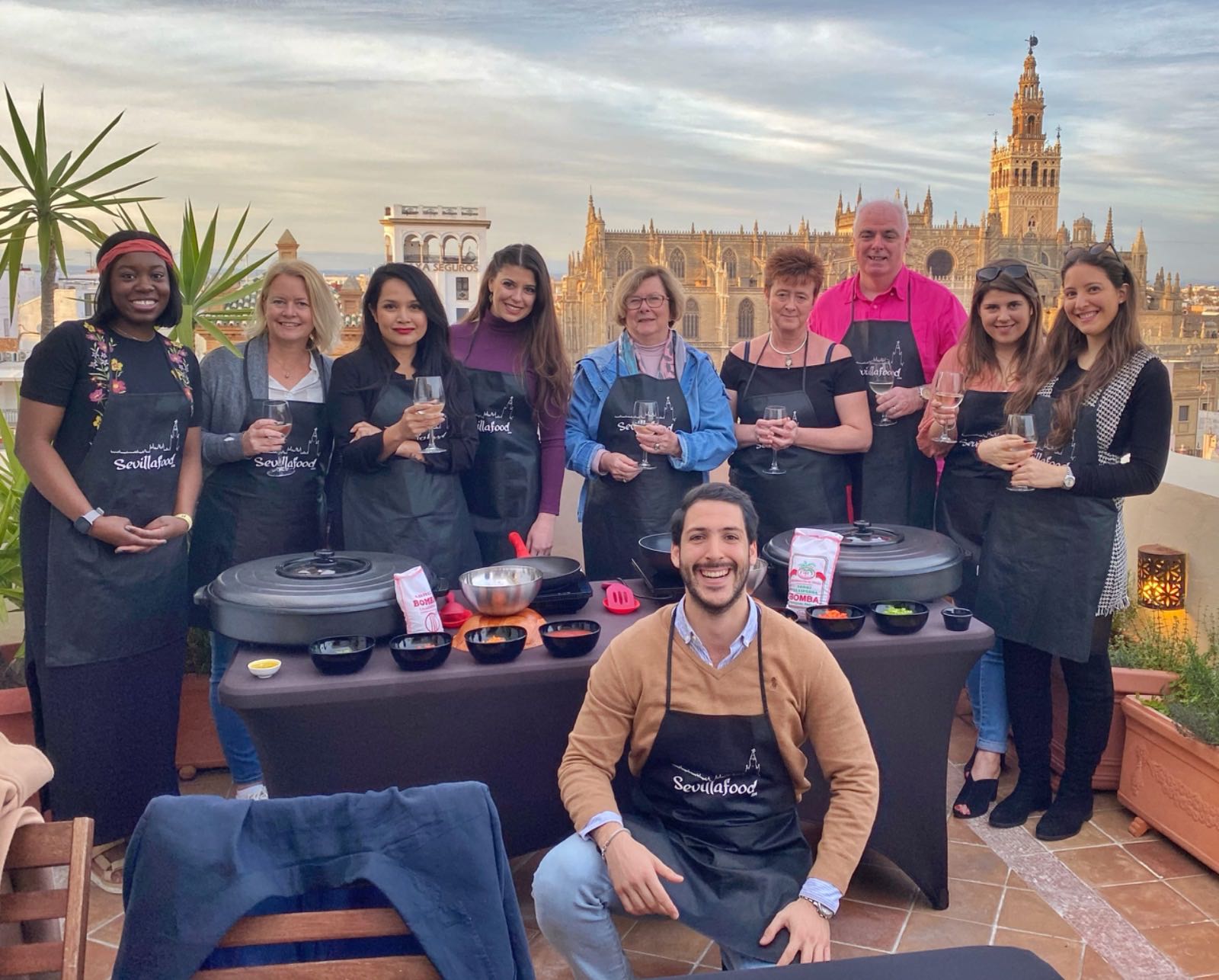
Good for couples, families and small groups who want to do something together rather than stand in a queue. It also suits people who have already seen the Alcázar and the cathedral and want something else.
Children can take part and often find it the best thing they do on the whole trip. Vegetarian, allergies and other needs the chef handles if you say so when you book.
If you are travelling as a group, the whole terrace can be booked privately. Then you have it to yourselves, with the chef and the view. That is the version I arrange for wedding parties and company trips, and it should be booked well ahead.
«You can photograph a cathedral. But what you learned to cook, you take home with you.»
- Duration: 1 hour 30 minutes
- Group size: Maximum 10 people per class
- Private: The whole terrace can be booked for a group
- Where: A rooftop terrace in the old town, overlooking the cathedral
- Language: English or Spanish with the chef
- Included: All ingredients, sides and drinks along the way
- Best time: Late afternoon, so you eat towards sunset
- Allergies: Say so when booking — it is accommodated
- Bring: Nothing. Just come hungry
Book the paella class with our partner. Transparent pricing — the same price as booking direct.
See dates and pricesFrequently asked questions
One hour and thirty minutes, from arrival to the last of the paella.
No. The chef explains every step, and most people who come have never made paella before.
No, paella comes from Valencia on the east coast. It has still become Spain’s best known dish, and the technique is the same wherever you cook it.
Yes. Say so when you book and the chef adjusts the ingredients.
A maximum of ten. The terrace takes no more, which is why everyone gets to stand at the pan themselves.
Yes. The whole terrace can be booked for one party, so you have it to yourselves with the chef. Book well ahead.
Yes. Children can join in the cooking, and many find it the most fun thing they do on the trip.