When I show Norwegian guests around Seville, I'm often asked: “Does Norway actually have anything to do with Seville?” The answer surprises most people. The ties between Scandinavia and this city on the Guadalquivir go back more than a thousand years. Viking ships have sailed up the river, a Norwegian king's daughter lived and died here, and Norwegian salt cod ended up on the tapas menu.
I've lived in Seville for more than 30 years, and I still get a little emotional standing by the river and thinking of all the Norwegians who came here before me, some with swords and some in a wedding dress. This is the story of Seville and Norway.
- Vikings took Seville in October 844 and were defeated at Tablada on 11 November. They came back in 859 and 966 but never reached the city again.
- Princess Kristina of Bergen, daughter of King Haakon IV, married the Infante Felipe in 1258, lived at the court in Seville and died here in 1262. She is buried in Covarrubias near Burgos.
- The St Olav chapel in Covarrubias was finished in 2011, keeping a 750-year-old promise to Kristina.
- Norwegian salt cod became bacalao tapas such as soldaditos de Pavía, and Norway had its own pavilion at Expo 92 in Seville.
- The Vikings sail up the Guadalquivir (844)
- The Vikings come back (859)
- The Vikings who stayed
- St Olav on his way to Gibraltar
- Princess Kristina – a Norwegian princess in Seville
- The St Olav chapel – a promise kept after 750 years
- Salt cod and timber – the trade that became tapas
- Norway at Expo 92
- Norwegians in Seville today
1. The Vikings sail up the Guadalquivir (844)
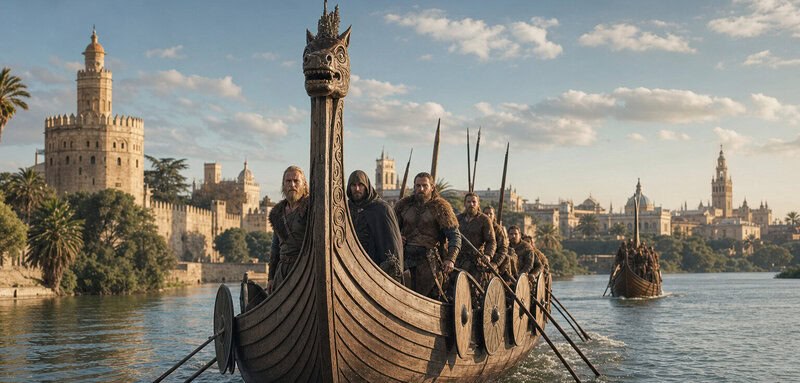
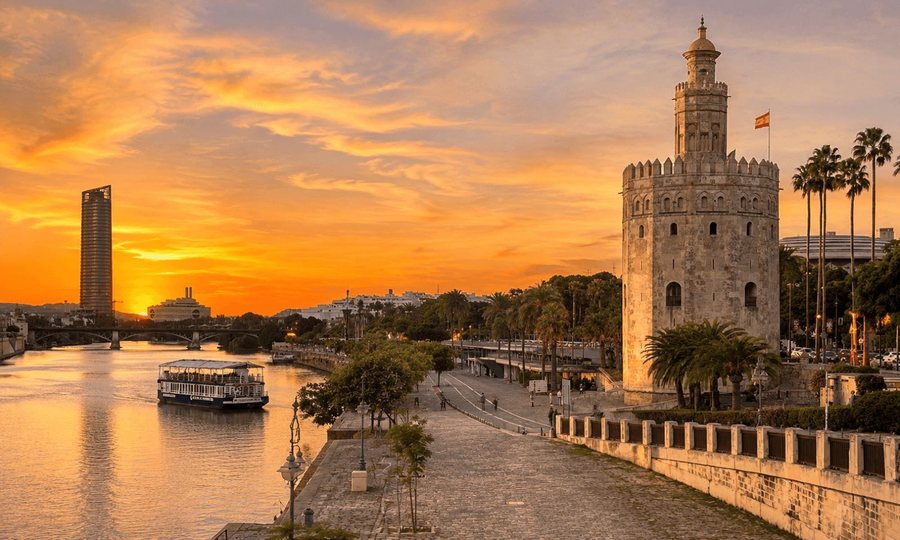
In the autumn of 844, a fleet of Norse ships appeared at the mouth of the Guadalquivir. The Vikings had already raided the coasts of France, Galicia and Lisbon. Now they rowed upriver towards Isbiliya, as Seville was called under the Moors.
By around 25 September they were close to the city. They made camp on Isla Menor, an easily defended island in the marshes south of Seville, and beat the local forces a few days later. In early October Seville fell. The city had no proper walls, and only the citadel held out. For about a week the Vikings plundered the city, and they tried to set fire to the new great mosque. It stood where the church of El Salvador stands today, and I always think of that when I cross the square.
The Arab chroniclers called them al-Majus, “the fire worshippers”. We don't know for sure how many came from today's Norway and how many from Denmark, but they came from the North.
The emir of Córdoba, Abd al-Rahman II, gathered a large army and set up his main camp on the hills of Aljarafe, west of the city. After weeks of skirmishes the Vikings were defeated at Tablada, just south of the city, on 11 November 844. The chronicles tell of around 30 ships burned and many hundreds killed or captured. The numbers in the Arab sources are probably exaggerated, but it was a heavy defeat. Those who escaped traded prisoners and loot for food and clothes, sailed back down the river and raided Niebla and the Algarve on their way out. Tablada is a neighbourhood of Seville today, and I drive past it almost every week.
Today the river is peaceful, and you can enjoy it yourself: see my tips for river activities on the Guadalquivir.
→ Read more about the city's long history in Seville's history – from the Moors to today.
2. The Vikings come back (859)
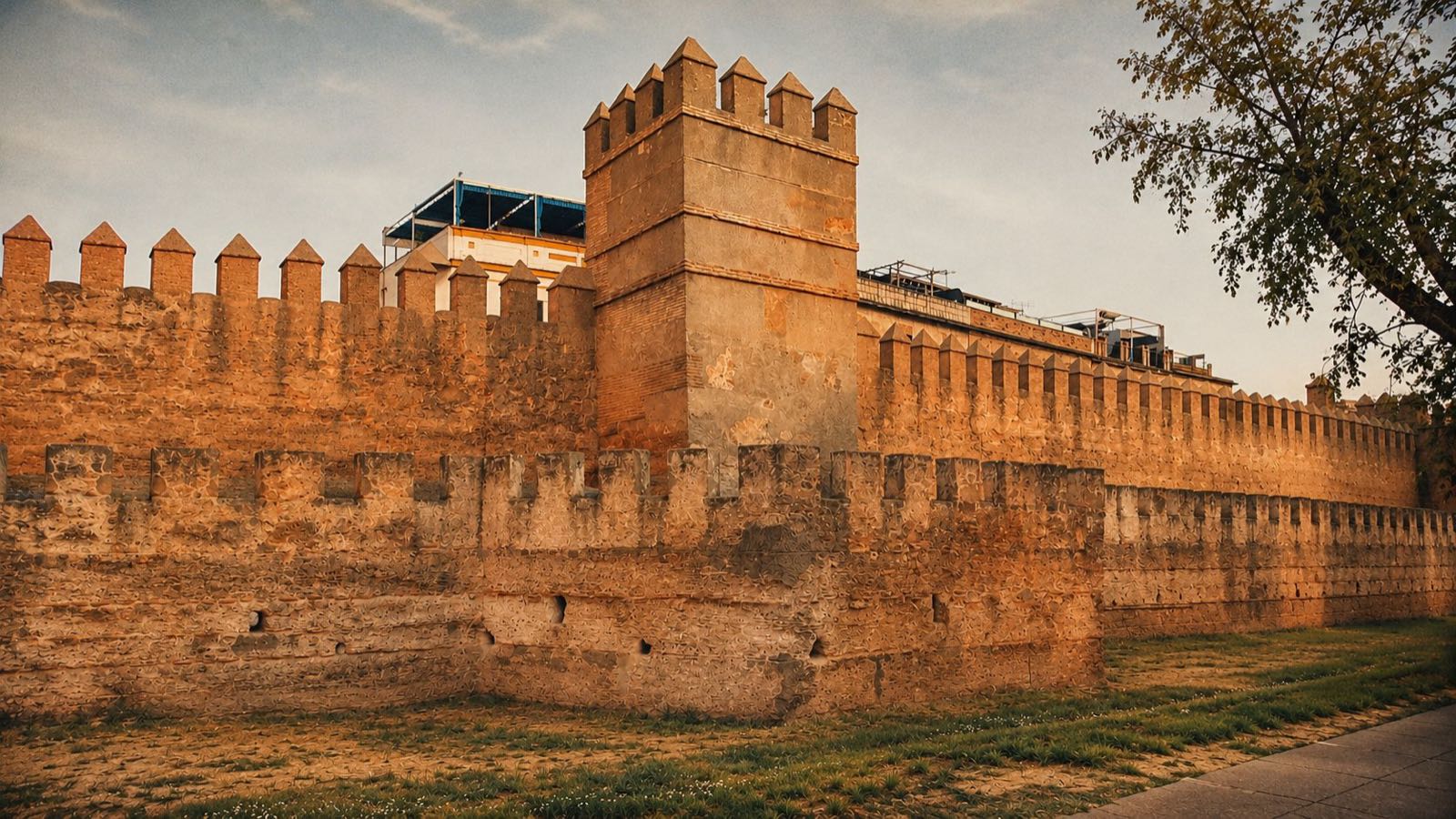
The Viking raid was a shock to the emirate. Afterwards Seville got city walls, and the emir built a shipyard in the city to have his own warships. He also set up a network of messengers along the coast, so he would hear quickly if the Vikings came back. The year after, he even sent an ambassador to the Vikings: the poet al-Ghazal, “the gazelle”.
That was wise, because the Vikings came back. In 859 a new Viking fleet appeared off the coast of Andalusia. This time the emir's ships were waiting, and the Vikings never made it up the river to Seville. Instead they sailed on, plundered Algeciras and continued into the Mediterranean. Another attack in 966 was also beaten off.
The walls you see at La Macarena today are younger, from the Almohad period in the 12th century. But the idea of protecting the city from attacks up the river began with the Vikings. When I walk along the wall with guests, I always tell them that in a way it was the Norsemen who made Seville build a wall.
3. The Vikings who stayed
Not all the Vikings went home. According to the Arab sources, some of the prisoners stayed. Some had to serve in the emir's guard, and others settled in the villages around Seville, near Isla Menor and Coria del Río. There they converted to Islam and married local women.
Then comes the fun part: their descendants are said to have become known for their cheese and dairy products. How much of that is true is hard to say. But it's such a lovely story that I often tell it, especially over a piece of Sevillian cheese and a glass of wine.
4. St Olav on his way to Gibraltar
King Olav Haraldsson, later St Olav, Norway's patron saint, was a Viking chieftain in his youth. According to Snorri's sagas of the Norwegian kings, he raided the coast of the Iberian Peninsula around 1013–1014 and wanted to sail on through the Strait of Gibraltar into the Mediterranean.
But then he had a dream: he was to turn back and go home to become king of Norway. He turned around, and the rest is Norwegian history. Historians disagree about how far south he really got. Still, I think of him every time I stand looking across the strait towards Africa.
→ See the Rock for yourself on a day trip to Gibraltar.
5. Princess Kristina – a Norwegian princess in Seville
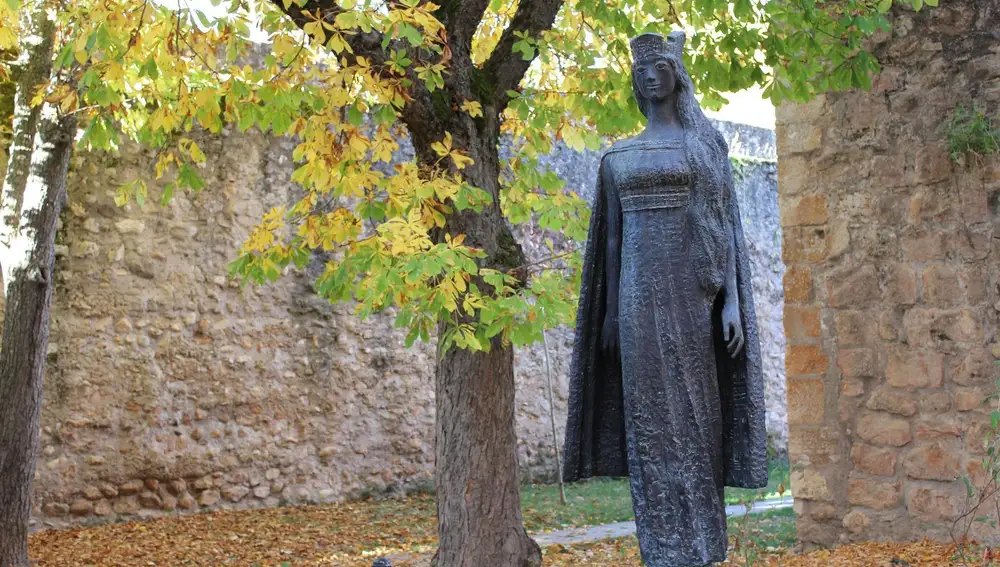
This is my favourite story. Kristina Håkonsdatter was born in Bergen, probably in 1234, the daughter of King Haakon IV of Norway. King Alfonso X “the Wise” of Castile wanted an alliance with Norway, and in 1257 Kristina travelled with a large retinue from Bergen through England and France to Spain.
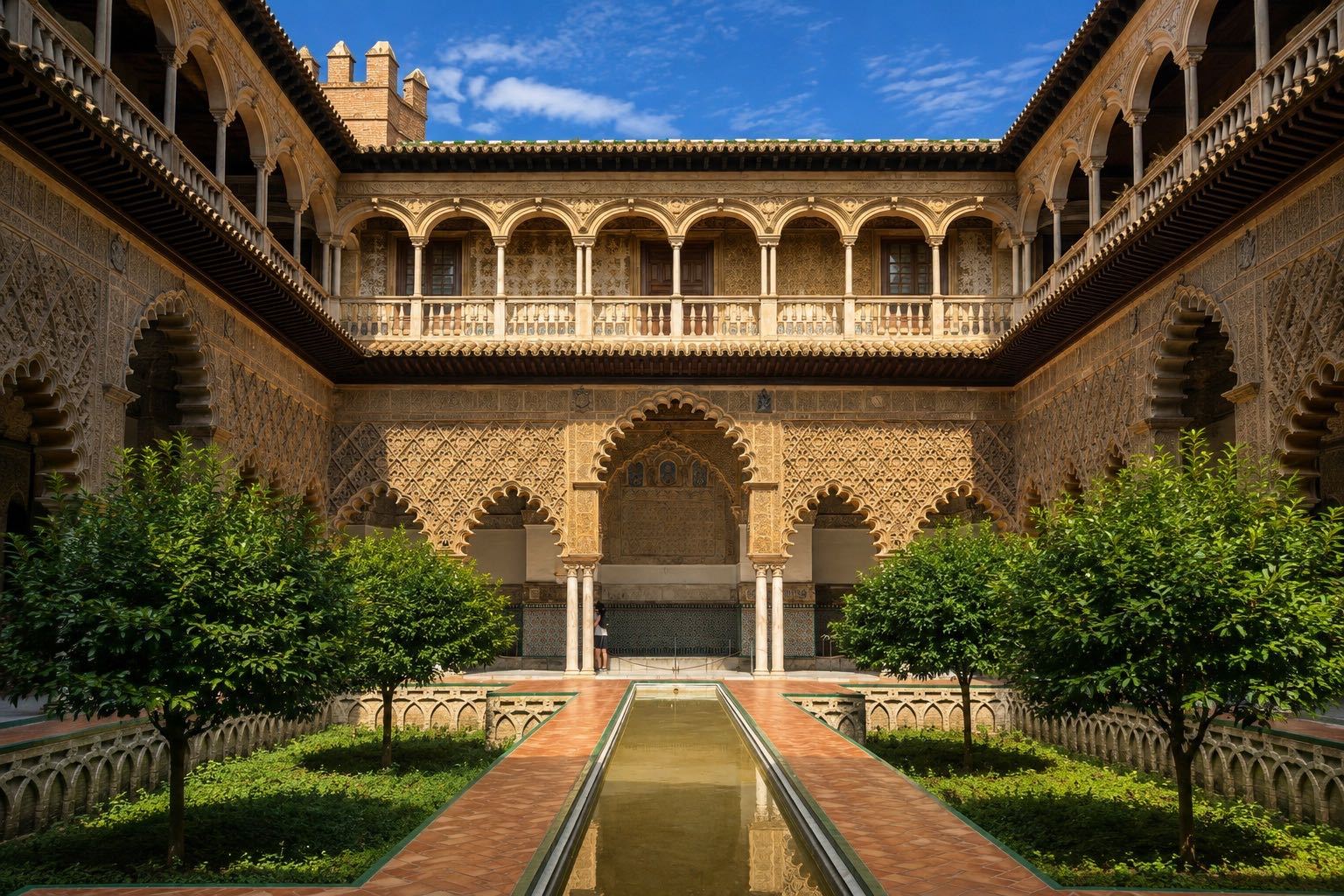
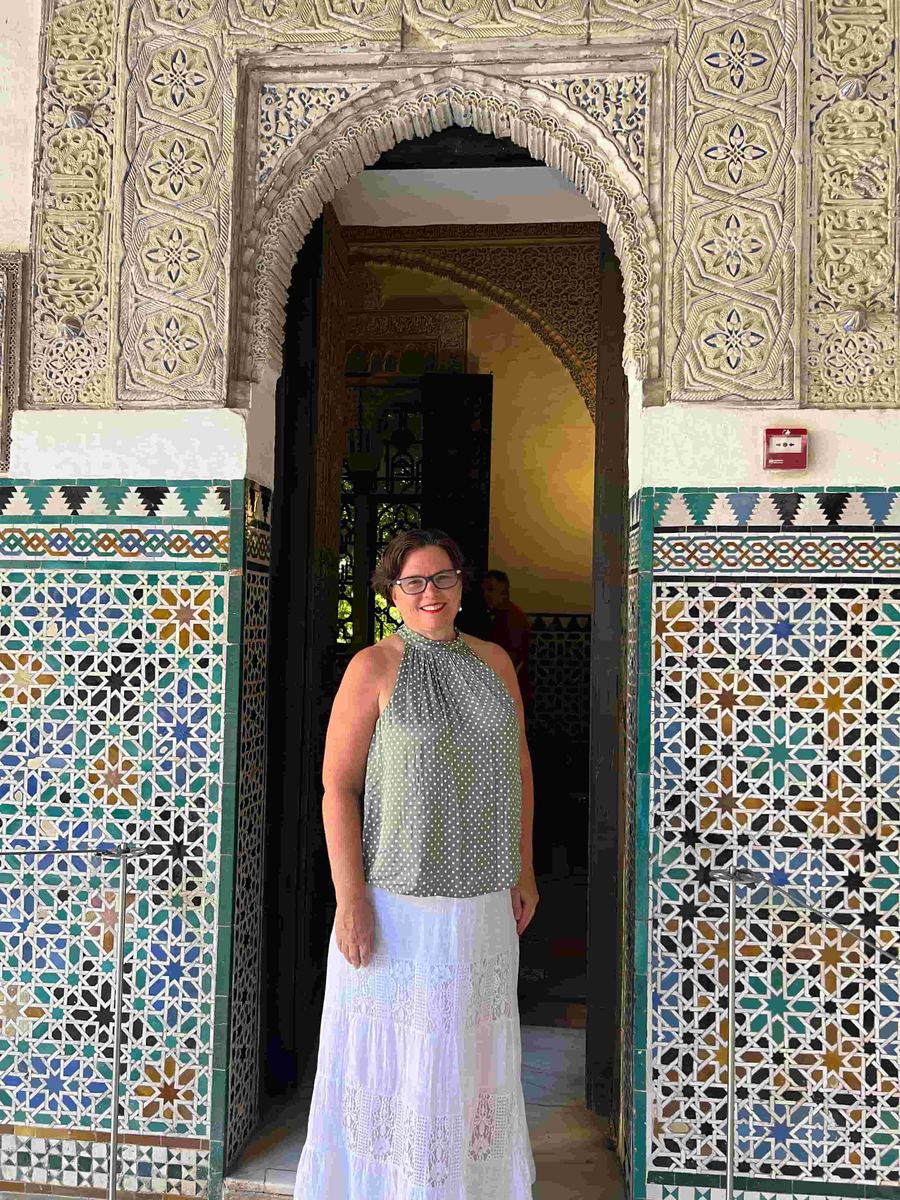
In the spring of 1258 she married Alfonso's brother, the Infante Felipe, in Valladolid. Felipe had been chosen as archbishop of Seville. The couple settled in Seville, where Alfonso X held court in the Alcázar. The Gothic Palace that Alfonso built in the Alcázar is still standing, and there we can picture the young princess from Bergen.
Kristina had only four years in Seville. She died here in 1262, only about 28 years old, and had no children. According to the royal chronicle of Alfonso X, she could not bear the Andalusian heat; others say she died of homesickness. As a Norwegian in Seville, I understand her perfectly in July! She was buried in Covarrubias, in northern Spain, where Felipe had been abbot. The cloister of the collegiate church still holds the sarcophagus traditionally said to be hers.
Alfonso X himself is buried in Seville Cathedral, just a few hundred metres from the palace.
→ Visit the palace where the court was held: the Alcázar of Seville.
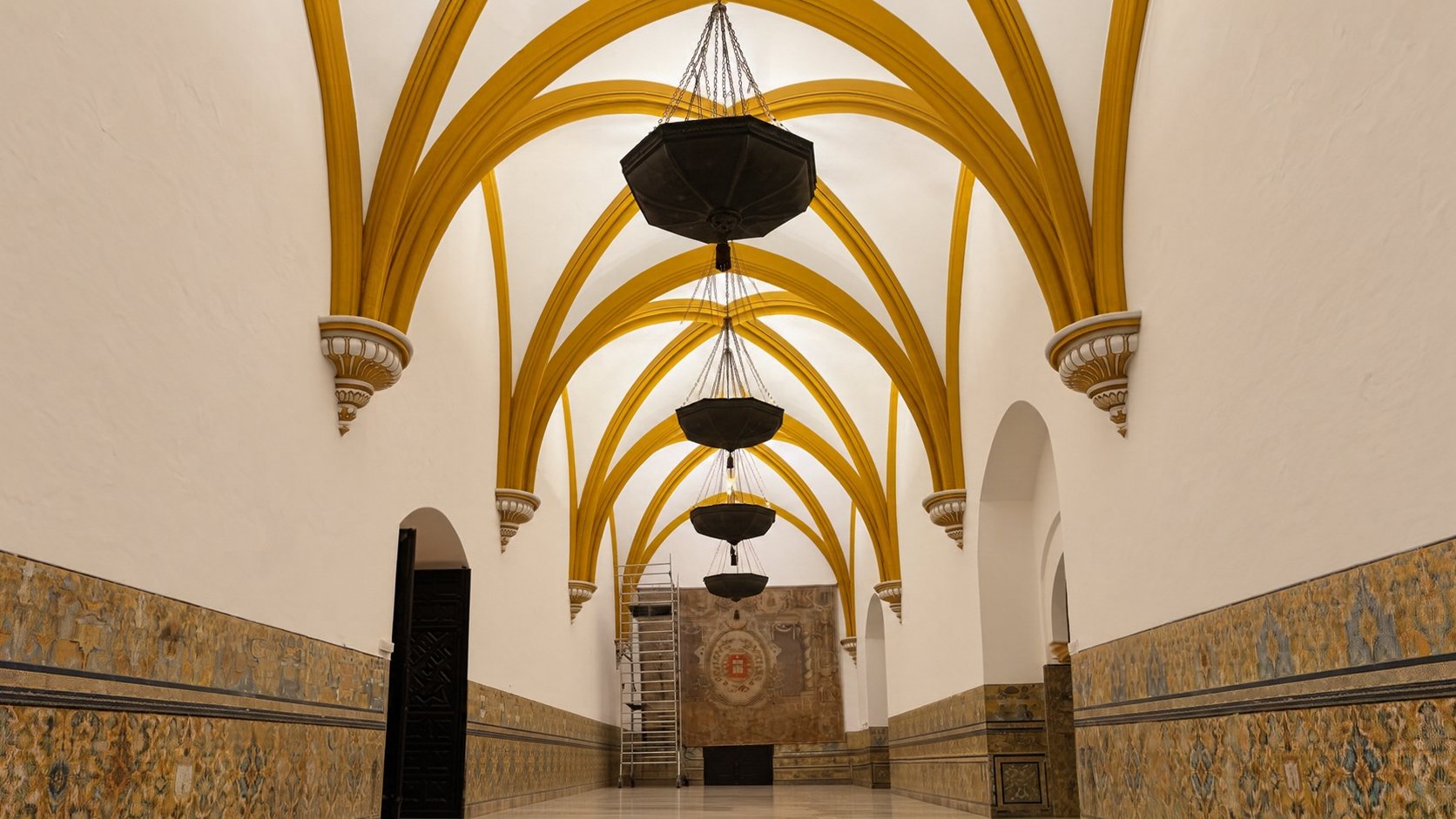
6. The St Olav chapel – a promise kept after 750 years
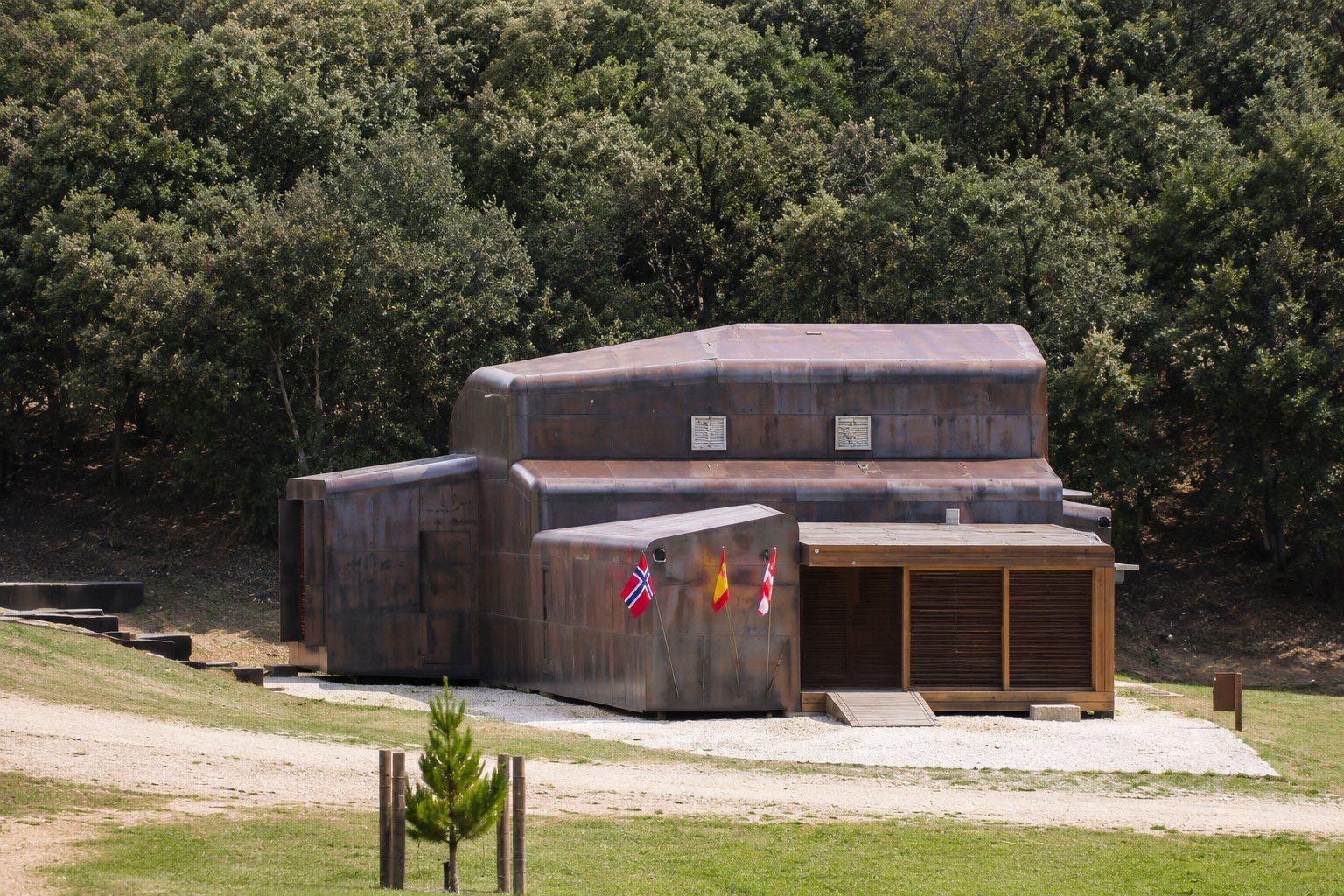
It is said that Kristina asked Felipe to build a chapel for St Olav, Norway's saint. Felipe promised, but the promise was never kept.
More than 700 years later, in 1992, the Princess Kristina of Norway Foundation was set up in Covarrubias. In September 2011 the St Olav chapel was finally finished, a modern church of steel and wood, with support from Norway and the region of Castilla y León. It stands in the Valdetorre valley, a few kilometres outside the village, and every detail has a meaning: its shape recalls a Viking ship, and the bell tower is 29.7 metres high, after the date Olav fell at Stiklestad, 29 July. Volunteers from the St Olav brotherhood show visitors around, and in summer it is in great demand. Covarrubias also has a statue of Kristina, and every year around St Olav's Day, 29 July, the village celebrates him.
Covarrubias is a small medieval village on the river Arlanza, and its story goes back further than Kristina. In the 10th century the area belonged to Count Fernán González, the man who laid the foundations of Castile, and the massive defensive tower that bears his name still stands next to the church. In 978 his son gave the village and the monastery of San Cosme y San Damián to his daughter Urraca, and Covarrubias became an important religious centre. Philip II left his mark here too, with the archive building from 1575 that you walk through on your way into the old town.
In the Gothic collegiate church, Fernán González and his wife Sancha lie buried beside the high altar. Their tombs were moved here in 1841 from the monastery of San Pedro de Arlanza. Out in the cloister waits Kristina, the princess who came from furthest away.
Covarrubias is a long way from Seville, near Burgos. But if you're driving through Spain or walking a pilgrim route to Santiago, it's worth a detour.
7. Salt cod and timber – the trade that became tapas

For hundreds of years Norway has sold stockfish and salt cod to southern Europe. In the 1800s, Norwegians in Spain were mostly in the timber, salt and salt-cod trade. Norwegian ships carried timber and fish south, and salt and wine back home.
Here in Seville, bacalao is part of the kitchen. Try soldaditos de Pavía, strips of fried salt cod and one of the most classic tapas in town. Or bacalao con tomate, which many Sevillians eat during Lent. When I eat it with Norwegian guests, I tell them: “This could well be fish from Lofoten or Kristiansund.”
→ Read more in Tapas and flamenco and Food markets in Seville.
8. Norway at Expo 92
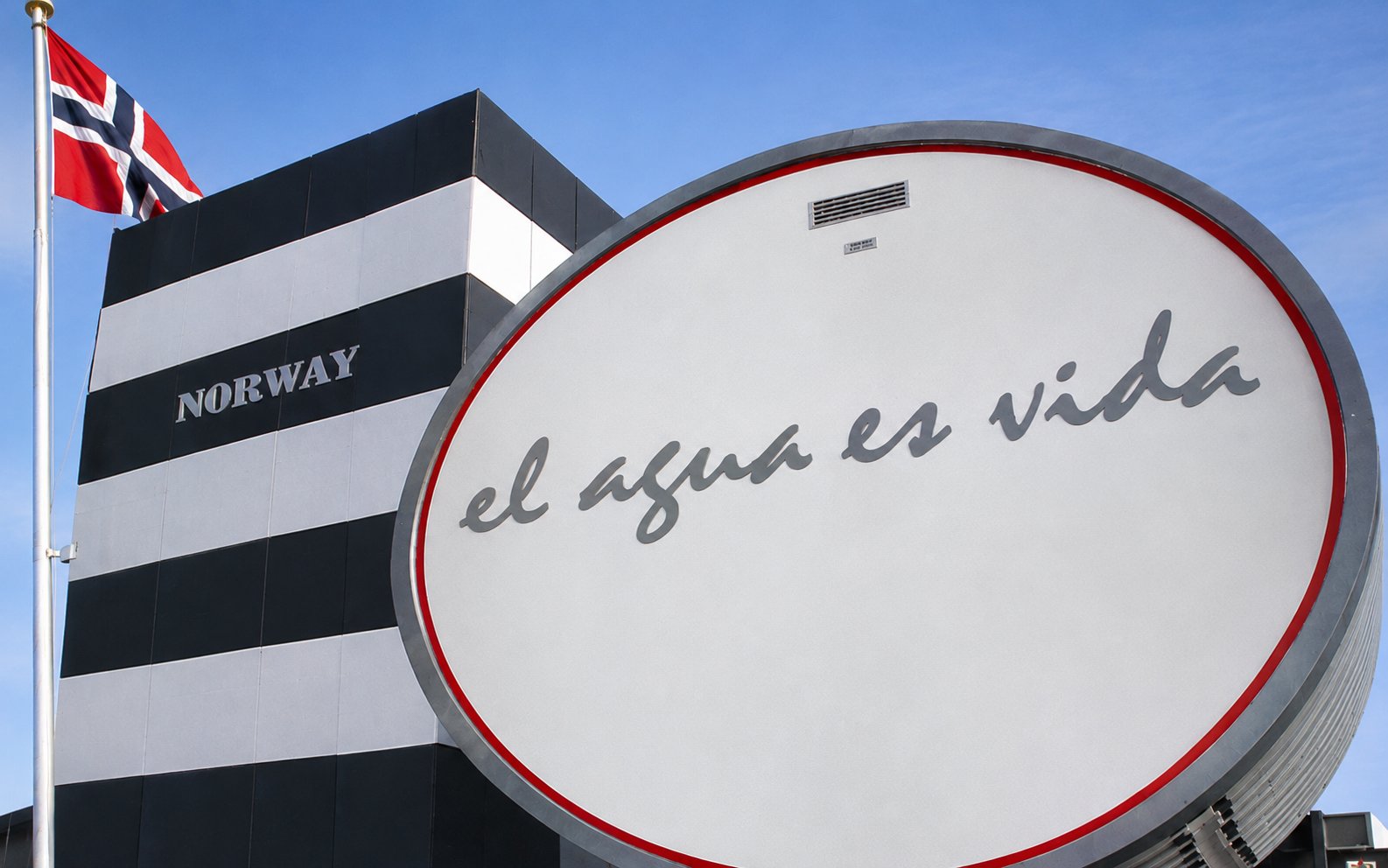
In 1992 the whole world came to Seville for the Expo 92 world's fair on La Cartuja island. Norway had its own pavilion, with water as its theme, as the basis of Norway's history, economy and everyday life. Its slogan was written in large letters on the façade: “El agua es vida”, water is life. It was one of the most eye-catching pavilions at the fair. Above a large pool rose an aluminium tower with masts and sails, a nod to our seafaring traditions. At the entrance stood a portico of real ice that stayed frozen all through the Sevillian summer. That probably impressed the Sevillians more than anything!
Inside, you walked through a 45-metre tube where sound and images followed the water from the glacier in the mountains all the way down to the ocean floor.
On 22 May 1992, King Harald and Queen Sonja came to visit. They watched Norwegian folk dancing on the El Palenque stage, toured the Norwegian pavilion and signed the guest book at the Andalusian pavilion. Expo 92 transformed Seville. The city got Spain's first high-speed train, the AVE line between Madrid and Seville, which opened in April 1992, as well as new bridges and a new airport terminal. For many Norwegians it was the first time they discovered the city.
9. Norwegians in Seville today
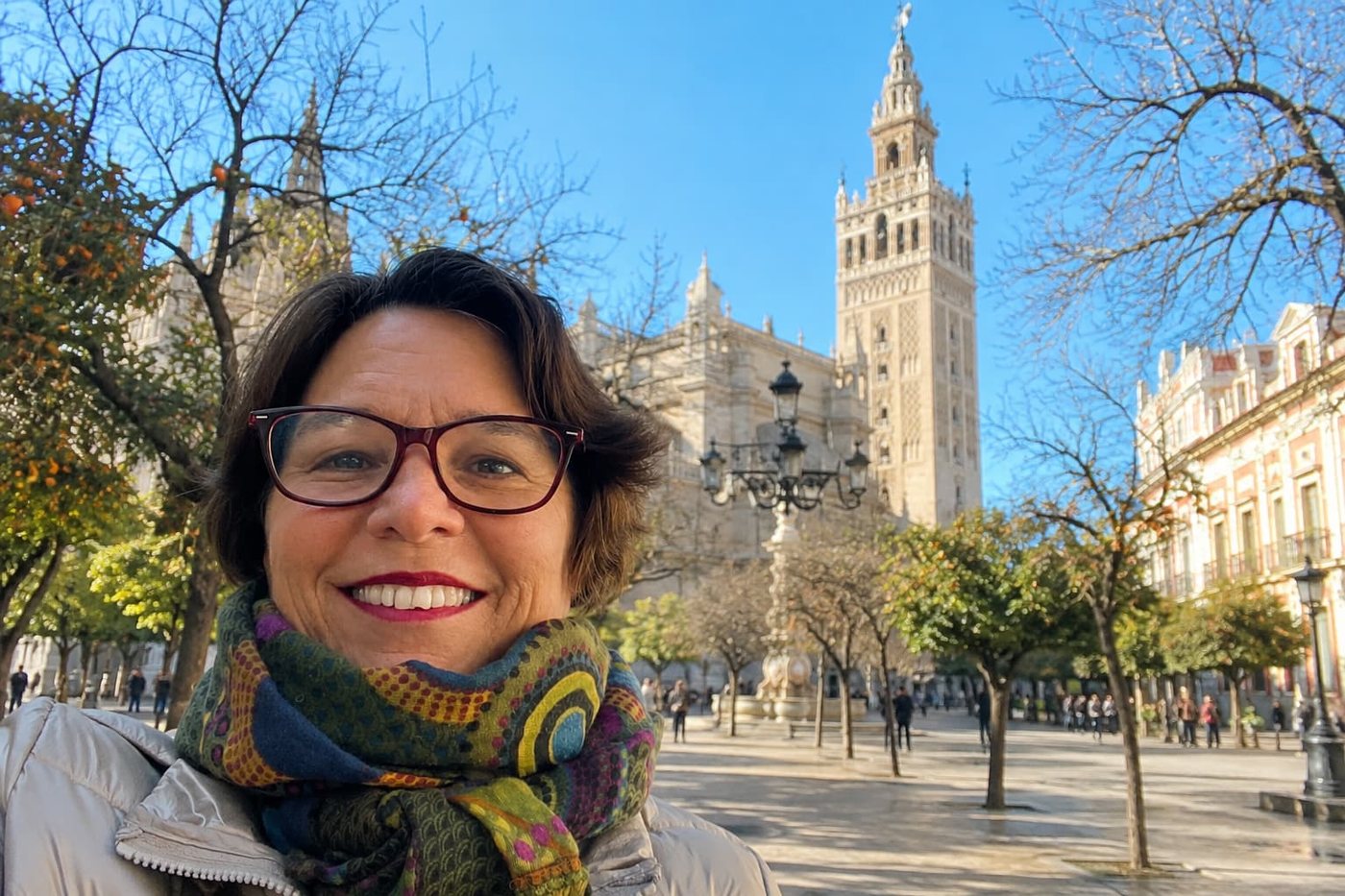
Today many thousands of Norwegians live in Spain all or part of the year, most of them on the coast. Seville has fewer of us, but more and more are discovering the city: students, retirees who want a city instead of a beach, and groups coming on culture and food trips. Norway has an honorary consulate in the city.
I came here myself more than 30 years ago and stayed. That's why I started Sevilla på norsk, to show Norwegians the city I love, in our own language. Maybe I'm just one more in the long line of Norwegians who fell for Seville, from the Vikings and Kristina to today. The difference is that I'm planning to stay.
→ Read more about me.
“The Vikings came with swords, Kristina came with a wedding dress, and we Norwegians today come with sunscreen. But all of us fell for Seville.”
- 844Vikings take Seville in October and are defeated at Tablada on 11 November
- 859 and 966The Vikings come back but are stopped before reaching Seville
- c. 1013–14Olav Haraldsson raids the coast of the Iberian Peninsula
- 1258Princess Kristina marries the Infante Felipe and moves to Seville
- 1262Kristina dies in Seville and is buried in Covarrubias
- 1800sNorwegian trade in salt cod, timber and salt in Spain
- 1992Norway takes part in Expo 92 and King Harald and Queen Sonja visit Seville; the first AVE train arrives from Madrid; the Princess Kristina Foundation is set up
- 2011The St Olav chapel in Covarrubias is inaugurated
Experience Norwegian history in Seville with me
Next time you stand by the Guadalquivir or walk through the Alcázar, you'll know that Norwegians have been here before you, for more than a thousand years. Get in touch and we'll put together a tour for you or your group.
Send me a messageFrequently asked questions
Yes. In 844 a Viking fleet sailed up the Guadalquivir and took Seville. The city was plundered for about a week, and on 11 November the Vikings were defeated by the emir of Córdoba at Tablada, just south of the city. They came back in 859 and 966 but were stopped before reaching Seville.
Kristina Håkonsdatter was the daughter of King Haakon IV of Norway. She married the Infante Felipe of Castile in 1258, lived in Seville and died here in 1262.
In the cloister of the collegiate church of Covarrubias near Burgos, in the sarcophagus traditionally attributed to her. The St Olav chapel, built in her memory and finished in 2011, is just outside the village.
Salted, dried cod survived long journeys and was a common Lenten food in Catholic countries. Much of it came from Norway, and today dishes like soldaditos de Pavía are classic Seville tapas.
- Store norske leksikon (Norwegian): Kristina Håkonsdatter
- Real Academia de la Historia (Spanish): Cristina de Noruega
- Wikipedia: Viking raid on Seville
- Lokalhistoriewiki (Norwegian): Olav den hellige
- EEA Grants: Fulfilled 750-year-old vision: the St Olav chapel
- Store norske leksikon (Norwegian): Nordmenn i Spania